Prime Manteca ConcretePrime Manteca Concrete

Slab foundation building in Manteca CA - a base built for the soil on your lot

Planning a house or addition and not sure which slab your ground calls for? We check the soil first, then pour a slab that suits it.

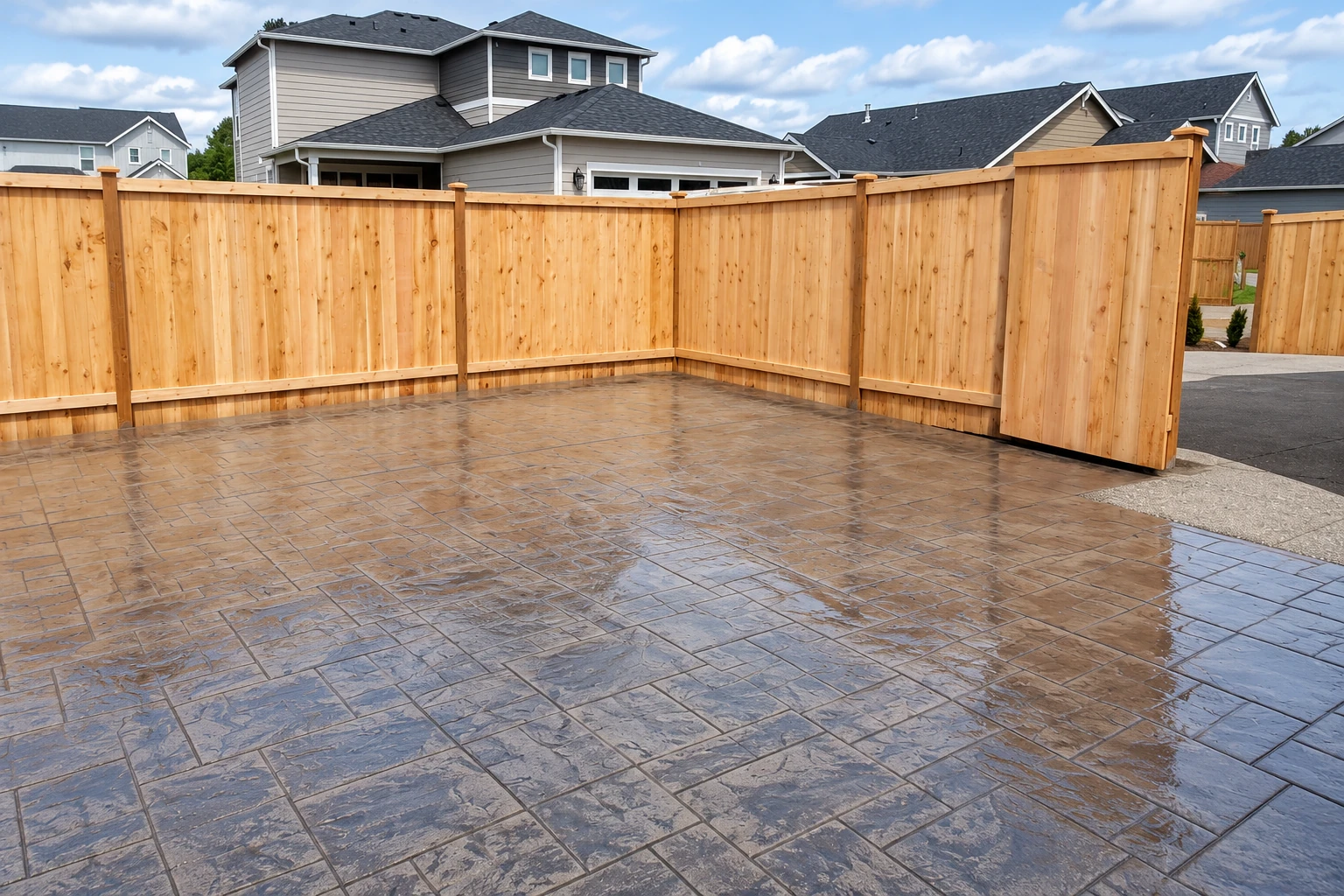
Stamped concrete patio with a brown stone pattern fills a fenced backyard, with a wooden gate and neighboring homes beyond.

Slab foundation building in Manteca, CA means pouring the ground-supported concrete slab your house sits on. It's reinforced with rebar or wire mesh or built as a post-tensioned slab, so the walls and floors above have a firm, even base.

What goes into a slab foundation for a Manteca home?

Most people who call about a slab are planning a new house, an addition or a backyard unit. They've got plans but not many answers about the ground. That's where I start, because a house slab can look perfect on pour day and still move if the dirt under it swells and shrinks. I'll also ask early who's building it, since California's license rules depend on that.

The price moves with the house's footprint, the slab type your soil calls for, how much ground gets dug out and replaced, and how easily trucks can reach the site. The schedule turns on getting soil numbers and an engineered design, any permits and inspections, and decent weather on pour day. After I walk the lot, my written estimate lays out the scope so you can compare it with other bids.
What decides how a house slab holds up

The concrete you see is the last step. These are the things I look at that you won't see once the house is framed, and why each one matters for the slab.

What the slab has to carry

A house slab carries walls, roof loads and everything you put on the floor, so its thickness and steel come from the engineer's design, not a rule of thumb. Plumbing and electrical lines run under it too, and they have to be set and checked before the pour because nobody wants to cut open a new floor later.

Where the water goes

Water is what makes many soils swell and shrink, so the ground around the slab has to fall away from the house and the pad should sit higher than the yard. We check how water runs across the lot before we set forms, because a slab sitting in a low spot keeps feeding the dirt under it.

When the concrete goes in

We pour early in the day when we can, since concrete placed in the midday heat dries too fast on top and can turn weak and dusty later. After that it needs curing, which is time kept damp so it reaches full strength, before framing loads go on it.

What happens when you call about a slab foundation in Manteca?

Here's how a slab job runs with us, from the first call to the day your framer can start, and who you'll be dealing with at each step.

  1. 1

    Call or send a request

    Call (209) 707-1014 or use the form. Tell us the address, the size of the building you're planning and whether you have a soils report yet, so I can come out with the right questions.

  2. 2

    I walk the lot with you

    I come out myself, ask what the slab needs to carry and look at the ground, drainage and access around it. Then I write up an estimate with the scope spelled out, so you can line it up against other bids.

  3. 3

    We handle permits and the pour

    Once you say yes, we take care of any permits the job needs and set up the inspections. Our crew lead runs the forming, base work, steel and pour, and I check in as it goes.

  4. 4

    Cleanup and curing time

    Our crew lead sees the job through to cleanup. The slab then needs its curing time before heavy loads go on it, and I'll go over when it's ready for your framer.

Request an estimate

How we approach slab foundation building

I won't pick a slab type by looking at a lot. The soil on your lot points to the slab, so I want a soils engineer's numbers in hand before we choose between a post-tensioned slab and one reinforced with rebar or mesh. That report tells us how much the ground moves with moisture, and the design follows from it instead of from habit.

The part I'll argue for is the base, the packed layer the slab rests on. It's hidden the day we pour, so it's usually the first thing a tight budget cuts, and that's backward. A nice finish on a slab that settles is still a problem, so we dig out soft dirt and pack the base properly even if that means saving somewhere else.

If your plans call for a different kind of foundation, that's our foundation installation work, and the same soil questions come first. Landlords and small property owners also call us for concrete parking lot building. That's flatwork too, the same flat poured concrete as a slab on a bigger scale, and it fails for the same reasons when the base and drainage get skipped.

Post-tensioned slab

Steel cables run through the slab and get pulled tight once the concrete has hardened, squeezing it together. It needs an engineered design and a crew set up for the tensioning step, and the soil report usually decides whether it's the right call.

Rebar or wire mesh slab

Rebar is steel bar tied into a grid inside the concrete, and mesh is welded wire. The steel holds the slab together if it cracks so the pieces don't spread apart, and most builders know this type well.

Get a written estimate for your slab foundation

Send the form and we'll reply within one business day. I'll set a time to come out, walk the lot and write up a free estimate, and there's no obligation to book.

(209) 707-1014

support@mantecaconcretemasonry.com

Slab foundations and site work around Manteca

Whether your slab needs a permit is up to the city or county, so we check with them on every project and handle the paperwork and inspections when one's needed. If your lot sits in an identified flood hazard area, FEMA says the community's permit file has to show the new building is properly elevated. FEMA encourages its Elevation Certificate for that, and you can use the same certificate to get flood insurance.

Around Manteca and in cities like Lathrop and Ripon, our slab calls tend to be new homes, additions and backyard units, plus rentals where a landlord wants something that stands up to tenants. I treat every lot's soil as its own question, because what's under one yard doesn't tell me what's under the next.

Why Manteca homeowners call Prime Manteca Concrete for slab foundations

I spent years doing upkeep for a property management company, patching cracked walks and sunken slabs and chasing water that pooled where it shouldn't. The same problems kept coming back, so I learned the trade on real jobs and started Prime Manteca Concrete in Manteca in 2021. Five years in, we're still best known for figuring out why old concrete failed before we pour new.

I come out to look at the job and write the estimate myself. Our crew lead and crew do the forming, pouring and finishing while I check in on the work. We're fully licensed and insured. Our promise is satisfaction guaranteed on every job. If you've got plans and an address, send a request or call (209) 707-1014.

Foundation installation

If your building plans call for something other than a slab on the ground, this covers how we lay out, form and pour the foundation it needs.

Concrete parking lot building

For rentals and small commercial properties where tenants park every day, a concrete lot built on a packed base with planned drainage holds up to the traffic.

Cities we serve around Manteca

We're based in Manteca and pour slabs and other concrete in the cities around it in San Joaquin and Stanislaus counties. If your city isn't listed below, give us a call and ask.

Questions about slab foundations in Manteca

Which type of slab foundation is right for my lot in Manteca?

The soil on your lot is the first thing that points to one slab type or another. Expansive soils grow and shrink as their moisture changes, and the Post-Tensioning Institute, a trade group, calls post-tensioned slabs a cost-efficient, high-performance answer on those soils. On less expansive ground, a post-tensioned slab uses one uniform thickness, and rebar or mesh is another option.

Who figures out the soil requirements for a house slab?

A geotechnical engineer, a soil specialist, provides the key soil numbers a slab design is built on. Some engineering work needs an onsite soil investigation, so plan on a soil check of your own lot and ask any builder who will supply those figures. If you already have a soils report, have it handy when you call.

Does a post-tensioned slab go in faster than a rebar slab?

It often can. The Post-Tensioning Institute says a post-tensioned slab can often go in faster than a comparable rebar or wire mesh slab, since there are fewer pieces to handle and less concrete to place, which can shorten the foundation stage. Your overall schedule still depends on the soil report, the design and any permits.

Will a new slab foundation crack?

Some cracking is normal in concrete, and the goal is keeping cracks small and tight. That same trade group says post-tensioning reduces cracking and keeps cracks tight, which keeps out insects and cuts down on water that can damage flooring and cause mold. A packed base and good drainage do their part with any slab type.

Can I build a slab foundation in California without a contractor license?

In some cases, yes. The state licensing board says an owner-builder needs no license to do the work themselves or with wage-paid employees on a structure not meant for sale, or when hiring properly licensed subcontractors. The state raised its small-job exemption from $500 to $1,000, but it only covers work that needs no permit when you employ no one.

How much does a slab foundation cost in Manteca?

Your price comes from the house's footprint, the slab type and thickness the soil report calls for, and how much digging, base work and grading the lot needs. Replacing poor soil or adding a post-tensioned design changes the number, so I give you a figure in writing after walking the site. Call (209) 707-1014 to set that up.

Settle the slab before your plans are final

Call (209) 707-1014 or send a request with your address and planned building size, because choosing the slab type early saves redrawing plans around it later.

(209) 707-1014Request an estimate