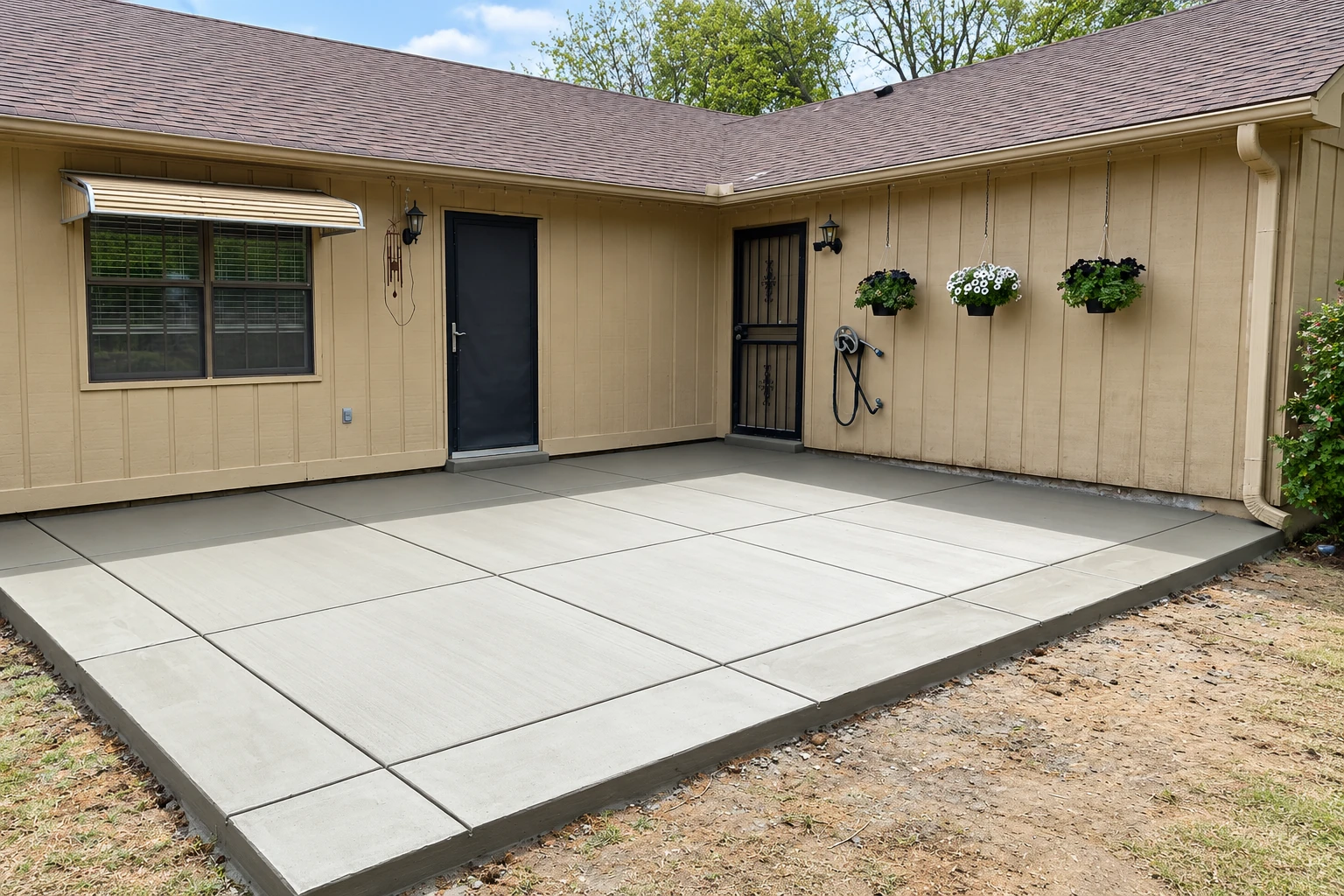
Concrete driveway building
When your driveway has sunk, split or tilts toward the garage, we tear it out, pack a new base on firm ground and pour a slab built for your cars.
Prime Manteca Concrete is a concrete contractor from Manteca. In Modesto we pour driveways, patios, walkways, steps and foundations for homeowners and landlords, and we start by working out why the old concrete failed.
Prime Manteca Concrete builds and replaces driveways, patios, sidewalks, steps, garage floors and foundations in Modesto. We also raise settled foundations and cut out failed concrete. Most calls here start with a slab that cracked, sank or holds water, so I look at why it failed before we talk about what to pour next.
A lot of what we see in Modesto is older concrete that's done its time. A driveway sinks at one corner, a walk lifts along a crack, or the patio sends water toward the back door. Before I started this business in Manteca in 2021, I spent years fixing those problems for a property management company. They kept coming back because nobody fixed what was underneath. We see the same thing just south in Ceres.
That's why the estimate starts with questions. Is the subgrade, the ground the slab sits on, soft or washed out? Where does water go when the sprinklers run? Was there ever a real base under it, or just raked dirt? The answers tell us whether to dig deeper, regrade, or add rebar, the steel bars that keep cracked pieces from drifting apart. Sometimes they tell us a simple replacement is enough.
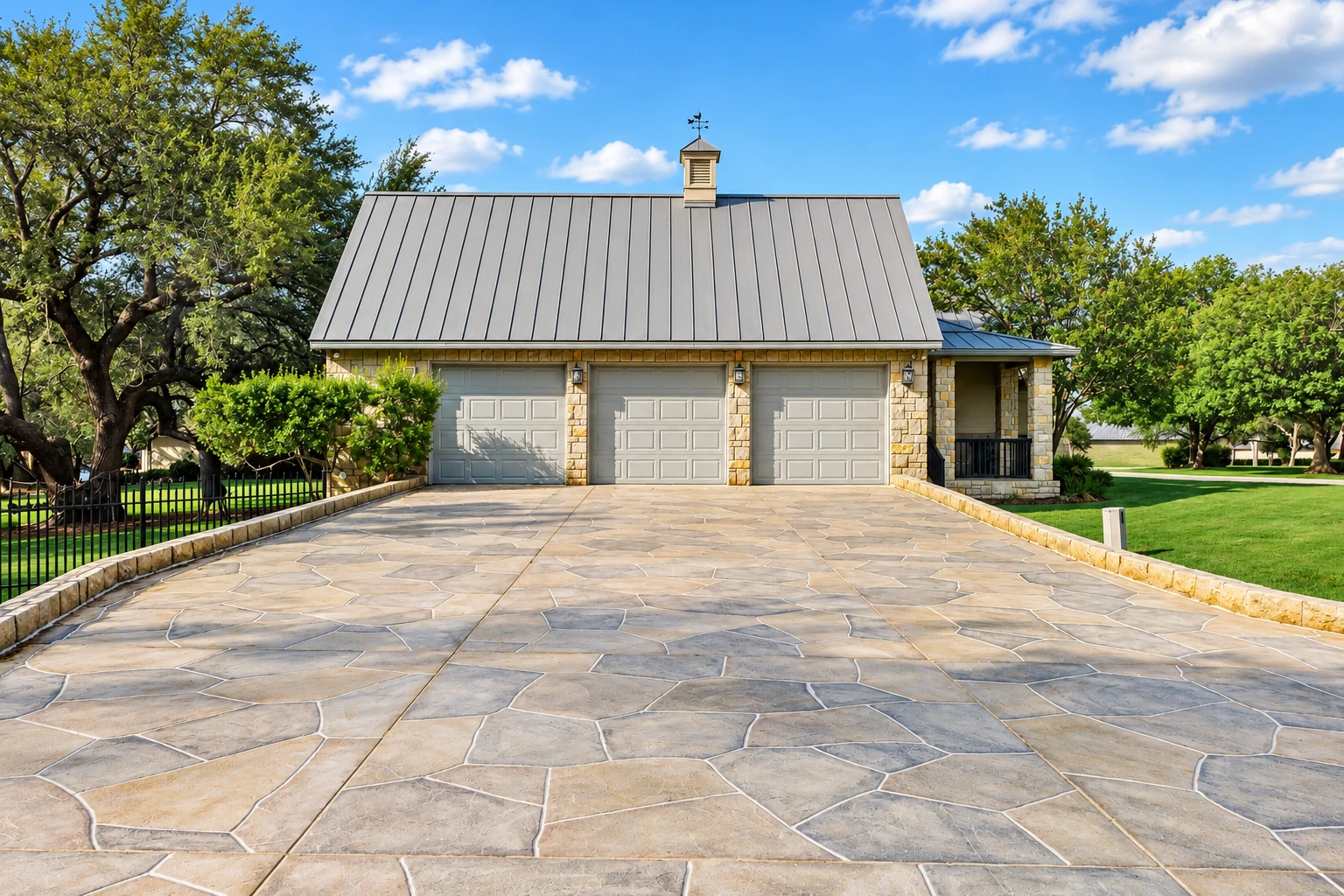
When your driveway has sunk, split or tilts toward the garage, we tear it out, pack a new base on firm ground and pour a slab built for your cars.
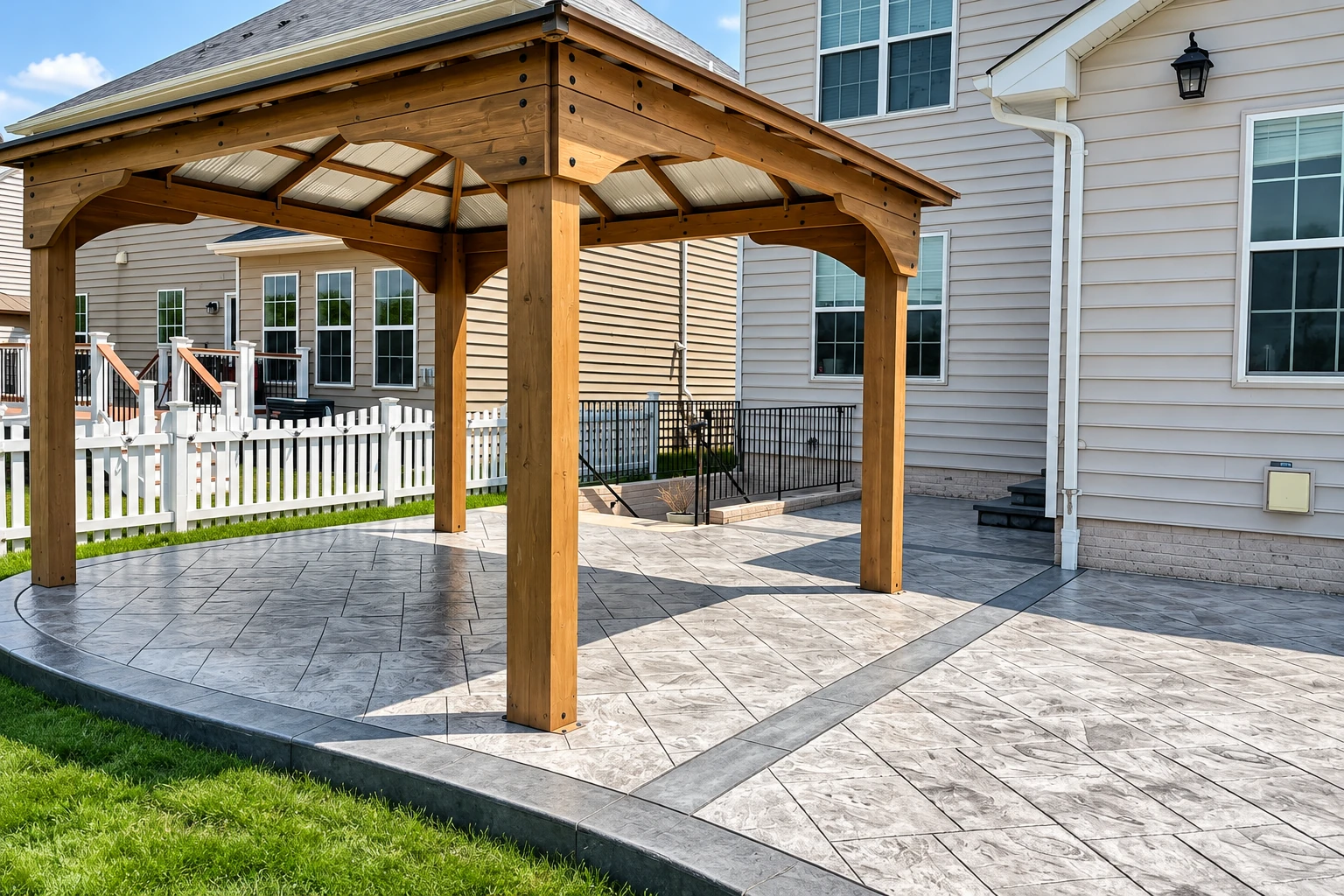
If your backyard patio floods or is pulling away from the house, we pour a new slab that slopes away from your walls so water runs out to the yard.
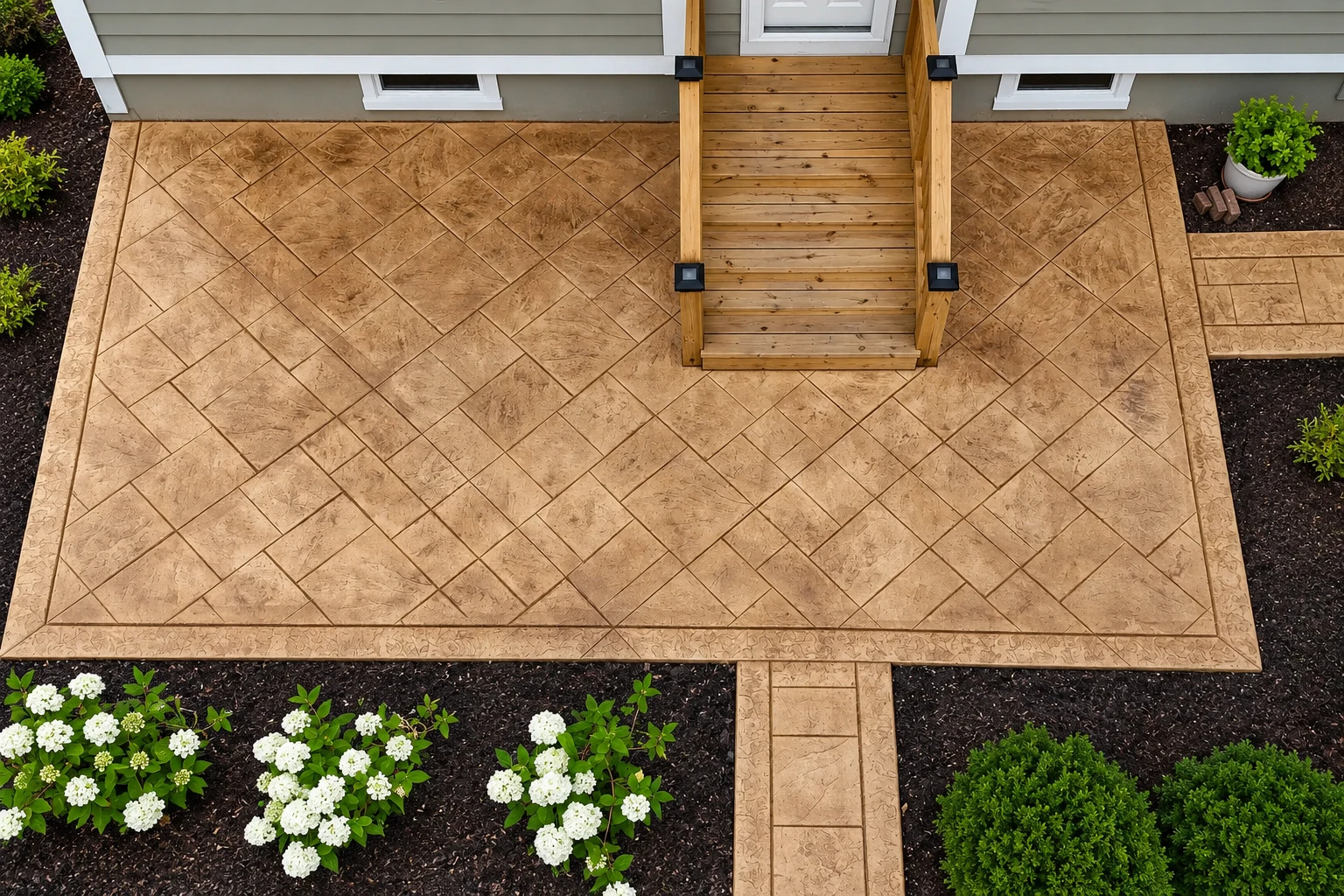
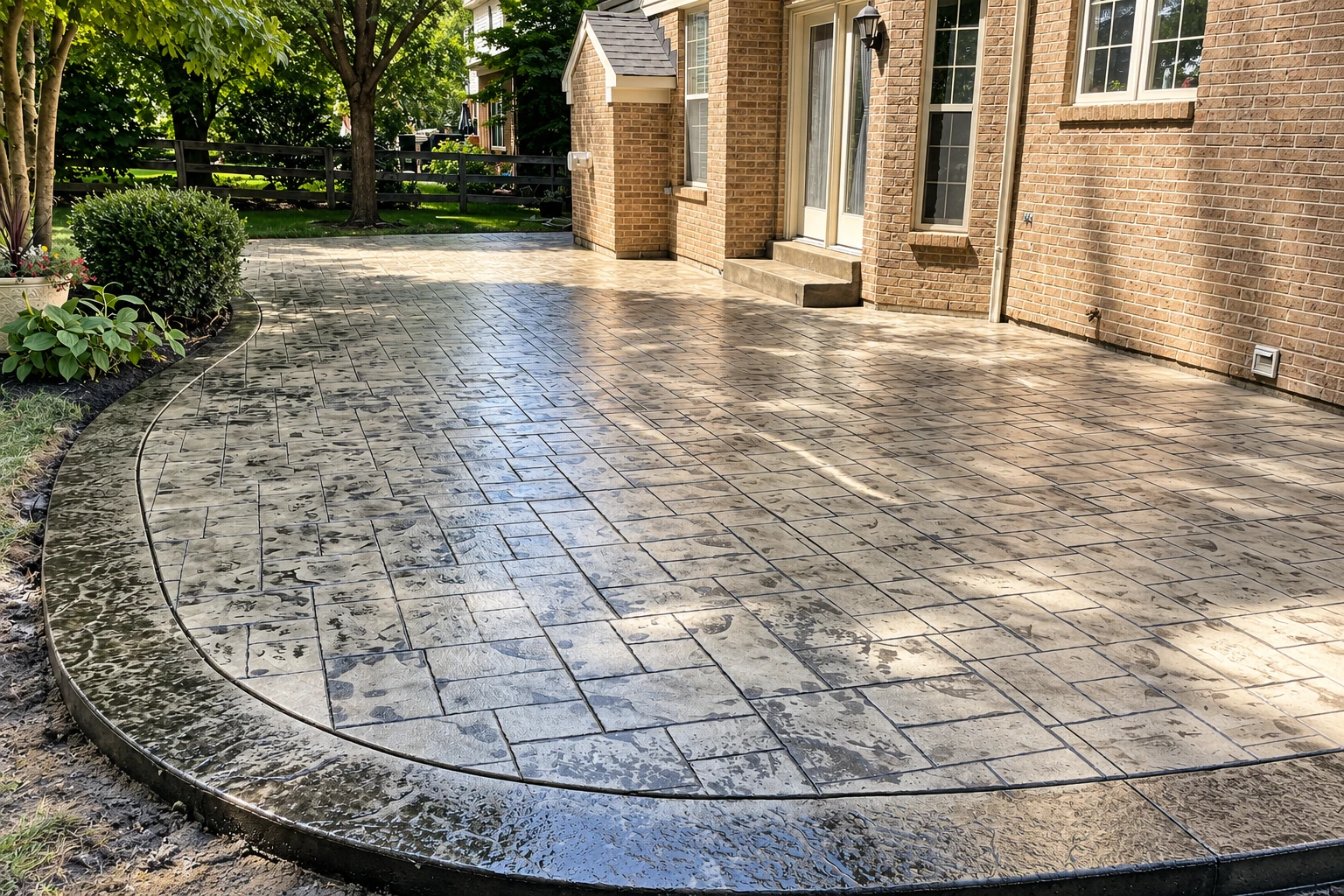
If you want the look of stone or brick without loose pavers to reset, we press a pattern into fresh concrete and color it to suit your house.
Landlords often call us about walks that trip people at a lifted crack. We replace the bad sections and cut joints so any new cracks land where we chose.
When a garage floor is pitted, stained or cracked straight across, we replace it with a fresh slab that drains toward the door and handles cars and workbenches.
When plain gray isn't what you want, we can color, stain or texture a slab so a front walk or patio matches the rest of your house.
Where soil slumps onto a patio or driveway, a concrete retaining wall holds it back. We put drainage behind the wall so water doesn't push it over.
For a shop, shed, addition or converted space, we pour an interior floor over a packed base and set it flat so flooring or equipment sits right.
Pool decks take splashing, bare feet and constant water. We slope the slab toward the drains and leave a finish with enough grip to walk on wet.
When front or back steps rock, crumble at the edges or settle away from the porch, we rebuild them with even risers and solid concrete underneath.
For a new garage, shop or addition on a slab, we prepare the ground, set the steel and pour the foundation the plans call for.
When an addition or outbuilding needs a full foundation, we dig, form and pour it to the plans so the framing has something solid to sit on.
Landlords and small property owners call us for lots and shared drives where the old surface keeps failing. We pour concrete sized for the traffic and plan where water goes.
Patio covers, decks and fences sit on footings, the buried concrete that carries the weight. We dig and pour them deep and wide enough for the load.
If part of your house or garage has settled and doors stick or floors slope, we work out why it sank before we lift and support it.
We saw-cut openings, remove damaged sections or cut a straight edge so a repair or new pour ties in cleanly to the concrete you're keeping.
We reply to every call and form within one business day to set a time to come out. I visit your Modesto property myself, walk the job, ask what the concrete needs to handle and put the scope in writing so you can compare it with other bids. The estimate is free, and there's no pressure to book.
(209) 707-1014In Modesto, the city decides whether a concrete job needs a permit. The City of Modesto's building and development services team handles building permits, and the city requires them so the work meets its safety rules and building codes. New construction goes through plan review, and most permitted projects need plans submitted first. That puts a few steps between the estimate and the pour.
When a job needs a permit, we handle the paperwork with the city and set up the inspections. I check with them on every project rather than guess. Modesto is a short drive from our base in Manteca, and we work the same way in Lathrop and Salida.
The price here mostly comes down to what's under and around the slab. That means how much old concrete comes out, how soft the ground is, how much base we dig out and pack, how thick the slab is and whether it needs rebar. The finish you pick and how close the truck can get matter too. The schedule turns on permits and inspections, our crew's calendar and the wait while the concrete cures. Your written estimate spells out the scope for your job.
The base, the packed layer under the slab, gets buried on day one. That's why it's the first thing a tight budget cuts and why so many slabs sink a few years later. If something has to give, I'll suggest a plainer finish before a thinner base. A broom finish, the light texture that keeps feet from slipping, still looks good on a slab that stays put.
I come out to look at the job and write the estimate myself. Our crew lead and crew do the forming, pouring and finishing, and I check in as the work goes, so the person who asked the questions at your house is still watching the job get built. We're fully licensed and insured, and it's satisfaction guaranteed on every job. Call (209) 707-1014 or send us the form to get started.
Most of the concrete we replace in Modesto failed for a handful of reasons. These are the things I check before we pour, and how each one changes the job.
Plenty of the failed driveways and walks we tear out were poured on dirt that was raked level and never dug out or packed. The ground settled, so the concrete did too. On a replacement we dig past the loose soil to firm ground, bring in base rock and compact it in layers, because that's what keeps the new slab from following the old one down.
A patio or driveway that tips back toward your walls sends every sprinkler run and every storm toward the foundation, and that water softens the ground under both. Before we form anything, I check which way the yard drains and where the downspouts empty. Then we set the slab to fall away from the house. Sometimes that means regrading a strip of yard first, and I'll tell you that at the estimate.
Concrete that dries too fast on top can turn weak and dusty later. We plan pours so the crew isn't racing the afternoon. While the slab cures, the slow stretch when it gains strength, we keep the surface damp or covered. That's also why we'll ask you to stay off it for a while, even after it looks dry.
Many of our calls come from landlords and small property owners as well as homeowners, and their concrete gets hard use: tenants' cars, trash bins dragged down the drive, kids on bikes. For those jobs I ask who uses the slab and how. The answer decides the thickness, whether it needs steel and how plain a finish makes sense for a place you won't see every day.
The price comes down to size, how much old concrete we haul away and how much base the ground needs, so I give you a number after walking your property. Thickness, rebar, the finish you choose and any permit work move it too. The estimate is free and puts the scope in writing so you can compare bids.
You'll stay off a new slab until it has cured enough to take the load, and you can walk on it well before you can drive on it. Tearout, base work and any inspection come first. I'll lay out the order of the job at the estimate, and the crew will tell you when the slab is ready for feet and then for cars.
Concrete usually gets some fine cracks, but a solid base and well-placed joints keep them small and in places we chose. Soon after the pour, we cut control joints, shallow grooves that give the slab a planned place to crack, so cracks follow the lines instead of wandering. Most of the ugly breaks we replace came from a soft base or joints cut late.
In Modesto, a one-story detached shed of 120 square feet or less doesn't need a permit, and neither does a fence 7 feet tall or less. That list doesn't name a concrete pad or footings, so we check with the city on each job. For a fence, the city also asks you to check setbacks with Planning at (209) 577-5267, even when no permit is needed.
On permitted work, the city requires an inspection before anything gets covered up or built over. For concrete, that often means the forms and steel get checked before we pour. We request those inspections and schedule the crew around them. If you have a question about which codes apply to your project, the city's building team is the place to start.
Clear the work area and the path to it. Move cars, planters and patio furniture, and tell us about sprinkler lines, buried wires or pet doors near the work. Keep kids and pets off the slab on pour day and while it cures. I'll point out anything else at the estimate, like a gate the truck needs to get through.
Call (209) 707-1014 any day from 7 AM to 11 PM or use our form to tell us where it's cracking or sinking and when it started. That way I show up already working on why it failed.