Prime Manteca ConcretePrime Manteca Concrete

Concrete driveway building in Manteca CA - a slab built on firm, even ground

Cracked, sinking or pooling driveway? We find out why the old one failed, then pour a new one on ground that's packed firm and even.

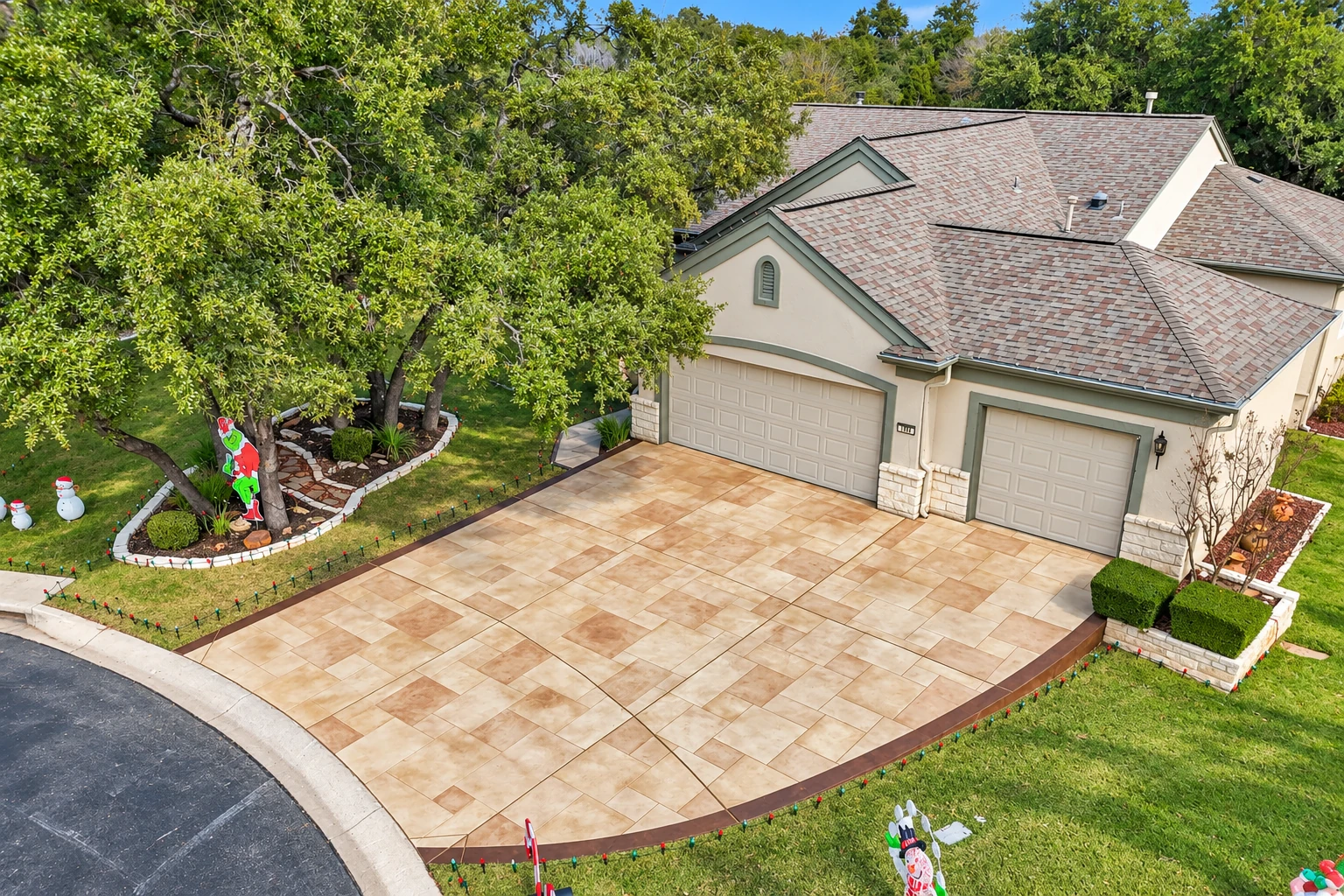
Large tan stamped-concrete driveway with a tile-like pattern leads to a two-car garage.

Concrete driveway building in Manteca, CA means we dig out and pack the ground, set forms, then pour and finish a new slab that carries your cars and sends water away from your house.

What goes into a new concrete driveway in Manteca?

Most people call us because the old driveway is cracked, sinking at the edges or holding puddles after the sprinklers run. Before we talk about pouring anything, I want to know why it failed, because a new slab on the same soft or badly drained ground usually ends up the same way. At Prime Manteca Concrete, that question comes first.

Your price mostly turns on how big the driveway is, how thick it needs to be for what you park on it, whether the old concrete has to be broken out and hauled away, and how much work the ground underneath needs before it's ready to pour on.

The schedule turns on whether the city or county requires a permit, on the weather and on curing, the wait while fresh concrete gains strength before it can take a car. When I walk the job, I put the scope in writing so you have your own number to compare against other bids.
Three things that decide how long a driveway lasts

A driveway can look perfect the day we finish and still crack or hold water a year later. These are the parts I look at most closely, and why they matter.

Where the water goes

Before we set forms, I look at where water runs now and where it'll run once there's a slab in its way. A driveway should fall away from your house toward the street or a spot that can take the water, because a slab that tips toward the foundation sends every storm and sprinkler cycle right at your walls.

Joints that decide where cracks go

Concrete shrinks as it dries, and some cracking comes with the material. Control joints are shallow grooves we cut so those cracks follow a straight line we picked instead of wandering across the slab. They have to go in on time, because joints cut late or skipped are how you get cracks in places nobody chose.

Curing before you drive on it

Curing is the stretch after the pour when concrete holds its moisture and slowly gains strength. If it dries out too fast or takes a car too soon, the top can turn weak and dusty. Before we leave, we tell you how to care for the new slab and when it's ready for feet and for cars.

What happens after you call about a driveway

Here's how a driveway job runs with us, from the first call to the day you get your driveway back, and who you'll be dealing with at each step.

  1. 1

    Call or send a request

    Call (209) 707-1014 or use our request form. It helps to tell us the rough size in square feet, whether an old driveway comes out and what vehicles park there.

  2. 2

    I walk the job and write it up

    I come out myself, ask what the driveway needs to carry and look at the ground, the drainage and what's around it. Then I write up the estimate with the scope spelled out, so you can set it beside other bids.

  3. 3

    We handle permits and pour

    Once you say yes, we take care of any permits the job needs and set up the inspections. Our crew lead runs the digging, base work, forming and pour, and I check in as the work goes.

  4. 4

    Cleanup and curing time

    Our crew lead stays on the job through cleanup, so you're left with the new driveway and nothing else. We'll tell you how long to keep foot traffic and cars off it while it cures.

Request an estimate

How we handle concrete driveway building

My first question is what you park on it. A sedan and a work truck put very different loads on a slab, and that answer shapes how thick we pour and whether it needs rebar, the steel bars set inside the concrete to hold it together if it cracks. Then I look hard at the ground underneath, because firm, even support is what lets a driveway carry weight without flexing.

That ground is the subgrade, the soil the slab sits on. We dig it out and pack it instead of raking it level, because loose dirt settles and takes the concrete down with it. It's hidden the day we pour, and it's often the first thing a cheap bid cuts. If something has to give, I'd keep a solid base and a plain finish over a fancy surface on soft ground.

In summer we plan the pour for the cooler part of the day, because concrete placed in midday heat can set up with a weak, dusty top. If the backyard needs work too, the same crew handles concrete patio construction, and our stamped concrete services can give a driveway the pattern of stone or brick.

Broom finish or stamped

A broom finish is the light texture we drag across fresh concrete so tires and shoes grip when it's wet. Stamping adds pattern and color, and it takes more time and labor than a plain broom finish.

Adding steel or pouring plain

Rebar adds to the cost, and a light-use slab on good ground doesn't always need it. For heavy trucks, an RV or ground that needs help, I usually recommend it because it holds a cracked slab together.

Get a written driveway estimate from the owner

Send the form and we'll get back to you within one business day to set a time for me to come out. The on-site estimate is free, and there's no pressure to book once you have it.

(209) 707-1014

support@mantecaconcretemasonry.com

Concrete driveways and the ground they sit on in Manteca

Whether a driveway job needs a permit here is up to the city, and it isn't settled for every driveway, so we check with them on each project. City of Manteca Engineering posts its encroachment permit form and the insurance it requires on the city's Development Engineering page, which also takes encroachment permit questions. When a permit is needed, we handle the paperwork and set up the inspections.

Some ground around Manteca is mapped as soil that's moderately deep over hardpan, a dense layer water doesn't move through easily, and moderately well drained. That describes some lots, not all of them, which is why I check the ground at your house instead of assuming. Summers here are hot and dry, the season when concrete is hardest to pour well.

We're based in Manteca and pour driveways in the cities around it in San Joaquin and Stanislaus counties, including Lathrop and Ripon. Across the area we see a lot of tract-home driveways with cracks running off the garage corners and slabs that have dropped where they meet the street.

Why Manteca homeowners call Prime Manteca Concrete for driveways

I got into concrete after years of upkeep for a property management company, fixing the same cracked walks and sunken slabs over and over. I learned the trade on real jobs and started this business in Manteca in 2021, and five years in, we're best known for working out why old concrete failed before we pour new.

I come out to look at the job and write the estimate myself. Our crew lead and crew do the forming, pouring and finishing, and I check in as it goes. We're fully licensed and insured. Satisfaction guaranteed on every job. If your driveway is cracking, sinking or holding water, call (209) 707-1014 or send us a request and I'll come take a look.

Concrete patio construction

A patio built on packed, well-drained ground gives you a flat, even spot out back for a table and chairs, without the puddles an old slab collects.

Stamped concrete services

Stamping presses a stone, brick or tile pattern into fresh concrete, so a driveway or walkway can match your house's style while keeping the strength of a poured slab.

Cities where we build driveways

Our crew pours driveways in Manteca and the nearby cities listed below. If yours isn't on the list, give us a call and ask, since it may still be close enough.

Driveway questions we hear from Manteca homeowners

How much does a new concrete driveway cost in Manteca?

A concrete driveway in the Stockton area usually runs about $7 to $14 per square foot, not counting removal of an old driveway. That's the going rate around here, not our price. Tearing out old concrete, adding steel and extra ground prep push it higher, and the estimate I write after walking your job gives you your own number.

How thick should a concrete driveway be for a truck or RV?

Four to five inches is standard and usually plenty for ordinary cars and SUVs. Trucks and RVs can call for six to eight inches, and poor soil can call for a thicker slab too. If a work van, a boat trailer or a delivery truck will use the driveway, mention it at the estimate.

Does a contractor need a license in California to pour a driveway?

Yes, for almost any driveway. The state licensing board's exemption for unlicensed minor work tops out at $1,000, and it applies only when the work needs no permit and the unlicensed person has no employees. Ask any driveway contractor for a license number before work starts.

What time of day should a concrete driveway be poured in summer?

Early morning whenever possible, according to a concrete trade group, since summer is when hot weather concrete problems usually show up. A windy, sunny day calls for more care than a calm, humid one at the same temperature. The same group advises dampening the forms and subgrade before the pour and starting curing right after it.

Should I seal my new concrete driveway?

Sealing can help, and one concrete supplier's guide says it keeps moisture and contaminants out once the concrete has cured for at least 28 days. Sealers wear down over time, so the same guide advises resealing regularly and following the sealer maker's instructions.

How do I get ready for a new driveway pour?

Plan to park on the street or somewhere else from the day we start until the new slab can take a car. Mark any sprinkler lines or valves near the edges before we dig, and keep kids, pets and bikes off the fresh concrete until we tell you it's ready.

Call any day about your driveway

We take calls seven days a week from 7 AM to 11 PM, so you can reach us at (209) 707-1014 after work or on a weekend.

(209) 707-1014Request an estimate