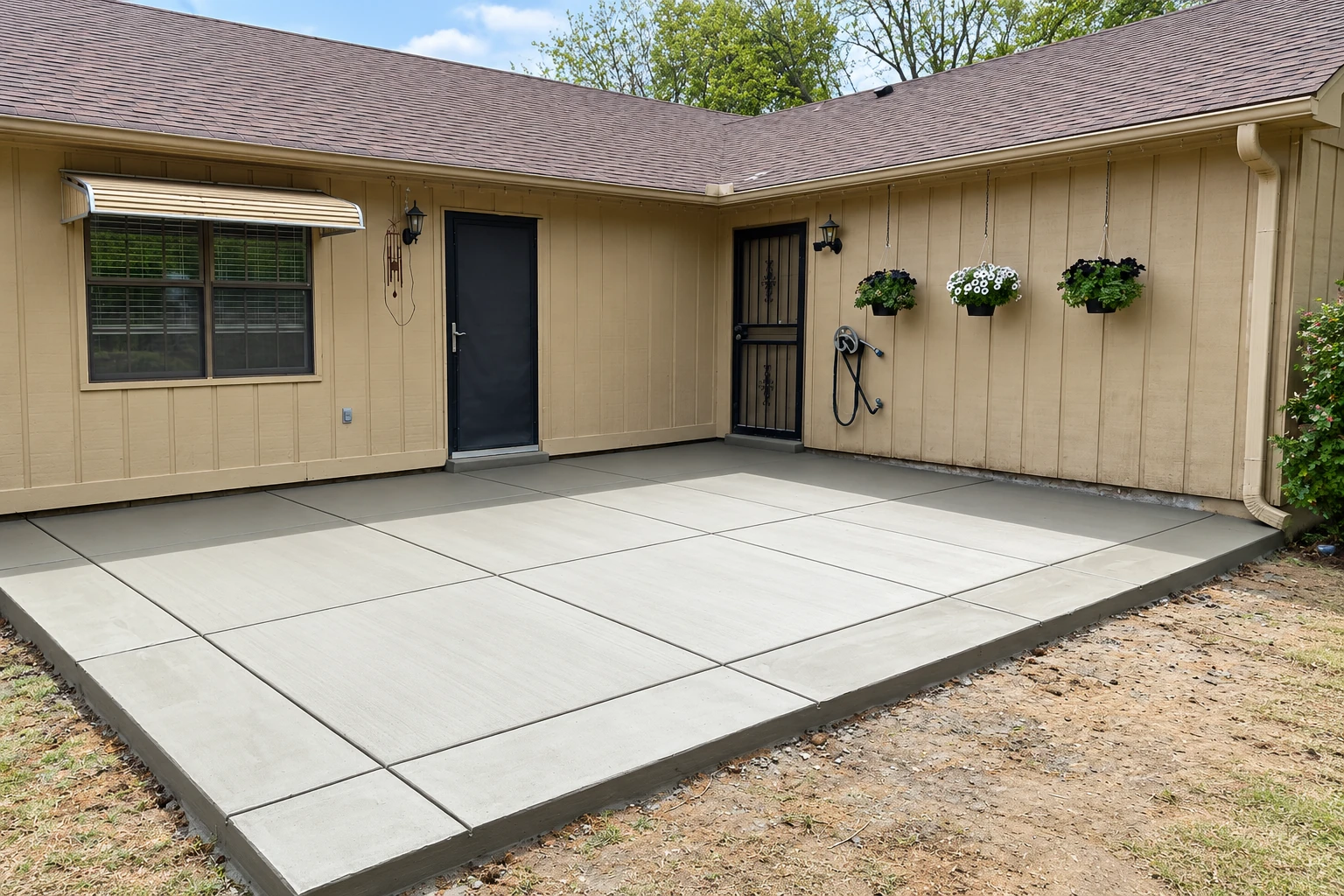
The first thing I figure out is whether your old floor is sound enough to resurface or whether it's time for a new slab. I look for sections that have dropped, cracks with one side higher than the other and spots that sound hollow, because cracks in a floor that has settled tend to show right back through a new top.
The part I care about most is the base, the packed ground the slab sits on, and the rebar, the steel bars set inside the concrete that hold it together if it cracks. When a budget gets tight, those are the first things people want to trim because nobody sees them. But a nice finish on a bad base still sinks, so I'd rather keep the base right and save somewhere else.
Some garage jobs turn out to be more than the floor. If you'd rather have color or a pattern than plain gray, we also do decorative concrete, and that's best decided before the pour. If the garage backs up to a slope and dirt keeps washing in along the back wall, a concrete retaining wall can hold that soil back so the new slab isn't fighting it.