Prime Manteca ConcretePrime Manteca Concrete

Concrete patio construction in Manteca CA - a slab that sheds water and grips when wet

Bare dirt or a cracked old slab out back? We build a patio on solid ground, sloped to drain and textured to grip.

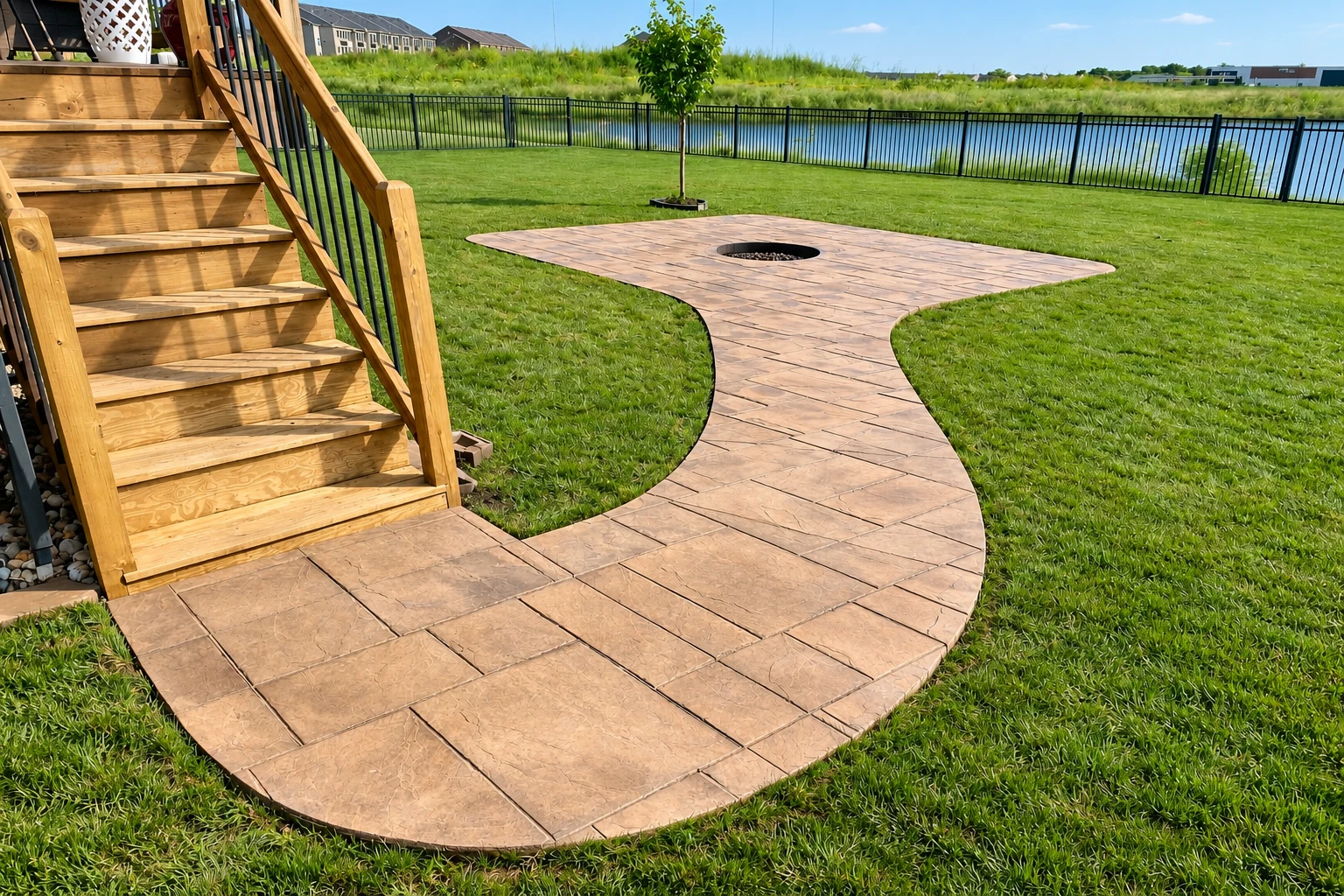
Curving stamped-concrete patio path connects a wooden deck to a square fire-pit area in a grassy yard.

Concrete patio construction in Manteca means our crew forms, pours and finishes a new slab in your backyard, so you get a solid outdoor floor for chairs, a grill or a table.

What goes into building a new concrete patio in Manteca?

Most patio calls start one of two ways. Either it's bare dirt or old pavers out back, or it's a slab that's cracked, sunk at one corner or holds a puddle after the sprinklers run. When it's the second one, I want to know why it failed before we talk about pouring new, because the same ground and the same water will be under the next slab.

The price comes down to the size, how much digging and base work the ground needs, whether old concrete has to be broken out and hauled off, and the finish you pick. A broom finish, a light brushed texture that gives your feet some grip, costs less than color or a pattern. The schedule turns on those same things plus the weather on pour day, and the estimate puts the scope in writing so you can compare bids.

The parts of a patio you won't see

A patio can look perfect the day we finish and still give you trouble later. These are the parts of the job that decide which way it goes.

Base before looks

When the budget gets tight, the base is the first thing people want to cut, because nobody sees it once the concrete's down. I'd rather cut a fancy edge. We dig out to firm ground and pack the subgrade, the soil and rock the slab sits on, because a slab on raked loose dirt settles right along with it.

Joints that decide where cracks go

Concrete shrinks as it dries, and almost every slab cracks somewhere. Control joints are shallow cuts we place on a plan so the crack follows a straight line we chose instead of wandering across the middle. Cut them late or skip them and the slab picks its own spots.

Giving it time to cure

Curing is the wait while concrete hardens and gains strength, and it's why we ask you to stay off a new patio for a while and keep heavy furniture off it longer. Rushing that, or letting the top dry out too fast in the heat, can leave a weak, dusty surface that wears early.

What happens after you call about a patio?

Here's how a patio job runs with us, from your first call to the day you put the chairs back out.

  1. 1

    Call or send a request

    Call (209) 707-1014 or use the form, and tell us roughly how big a patio you want, the finish you're leaning toward and what's out there now. We'll get back to you to set up a visit.

  2. 2

    I walk the yard with you

    I come out myself, look at the ground, where the water runs and what failed if there's an old slab, and ask how you'll use the patio. Then I write up the scope and price so you can compare bids.

  3. 3

    We prep, form and pour

    Once you say yes, we take care of any permits the job needs. Our crew lead runs the digging, base, forms and pour, and I check in on the work as it goes.

  4. 4

    Cleanup and the curing wait

    The crew cleans up and pulls the forms. We'll tell you when you can walk on it and when the furniture can go back, because the slab is still curing after we leave.

Request an estimate

How we build a concrete patio

I start with the finish, before we talk about forms or concrete, because it changes how the whole pour is planned. A broom finish is something any good crew can do. Some decorative finishes take a lot more skill, so when you tell me the one you like, I'll show you our own work with it and you can judge for yourself.

If you like the look of stone or brick, that's our stamped concrete work, and we plan the patio around the pattern from the start. If you want a path from the side gate or the driveway, we can pour a concrete sidewalk at the same time, so the levels and the slope line up.

Every patio gets a slope away from the house, so rain and hose water run off instead of soaking in along your foundation, and a texture that grips when it's wet. A slick slab next to a hose bib or a pool is how people get hurt, so we don't trade grip for shine.

Broom finish or decorative

A broom finish is the simple, grippy choice and the easiest on the budget. Color, exposed stone or a stamped pattern looks richer but takes more skill and more care on pour day.

One pour or in stages

A big patio can go in all at once or in sections, like the main slab now and a walk or an extension later. One pour usually lines up cleaner, while stages spread out the cost.

Get a free written estimate for your patio

Send the patio size, the finish you're thinking about and any home buyer's disclosures that mention the soil, and we'll get back to you within one business day. I'll come out to see the yard myself and write up a free estimate, with no obligation to book.

(209) 707-1014

support@mantecaconcretemasonry.com

Concrete patios and the ground under them in Manteca

Whether a patio needs a permit is up to the city or county where you live, so we check with them on every project. When one is needed, we handle the paperwork and set up the inspections, so you're not the one chasing them.

The bigger question is usually the dirt. California guidance on expansive soils, clay that swells when it's wet and shrinks as it dries, says they can lift and crack patio slabs. Your home buyer's disclosures may tell you whether your lot has them, and so can the local building department or a soil engineer.

Where the soil is expansive, that guidance calls for keeping it from drying out before and during the work, by covering it with plastic or wetting it down, and pre-wetting can take days or even weeks, generally with a geotechnical professional involved. We see cracked and lifted patios across Manteca and nearby Lathrop and Ripon, and the ground is usually where I start looking.
Why Manteca homeowners call Prime Manteca Concrete for patios

I spent years doing upkeep for a property management company, fixing cracked walks and sunken slabs that kept coming back. That's why I learned the trade on real jobs and started Prime Manteca Concrete here in 2021, five years ago now. Homeowners call us, and so do landlords and small property owners who need concrete that holds up to everyday use.

I come out to look at every job and write the estimate myself. Our crew lead and crew do the forming, pouring and finishing, and I check in as the work goes. We're fully licensed and insured. We stand by one promise, satisfaction guaranteed on every job. When you're ready, call (209) 707-1014 or send us a request with a rough patio size.

Stamped concrete services

If you want your patio to look like slate, stone or brick instead of plain gray, a pattern pressed into the wet concrete gets you there.

Concrete sidewalk building

A new patio is only as handy as the path to it, and a walk from the gate or driveway keeps your feet off wet grass.

Cities where we build concrete patios

We're based in Manteca and work in the cities around it in San Joaquin and Stanislaus counties. If you don't see your city on our list, give us a call and ask.

Patio questions we hear from Manteca homeowners

How much does a concrete patio cost in Manteca?

We give you a written price after I see the yard, because what's under the dirt and the finish you pick matter as much as the size. A broom finish, a simple square shape and no old slab to haul off keep it lower. Color, stamping, curves, steps or a lot of digging to reach firm ground raise it.

What finishes can I get on a concrete patio?

Beyond a plain broom finish, a patio can have exposed aggregate, where the stones in the mix show on top, color dusted onto the surface or mixed into the concrete, or a stamped pattern. National concrete industry guidance says these take much more care and experience, so ask any crew to show you patios they've done in that finish.

When is the best time to pour a concrete patio in summer?

The best pour day isn't hot, dry and windy, since national concrete guidance says heat and dry air hurt fresh concrete more as the wind picks up. That's mostly a summer problem but can happen any time of year. For stamped patios, the guidance says early morning or late evening is the most practical time when the pour can't be moved.

Does a contractor need a license to build a patio in California?

Usually, yes. The state licensing board requires one when a job needs a building permit, uses any extra workers, or costs $1,000 or more in labor and materials, and patios fall under the C-8 Concrete class for flat concrete work. A C-8 contractor works with wood only as concrete forms, so if you want a wood bench or pergola too, ask which licensed trade builds it.

How do I get my yard ready for a patio pour?

Clear out furniture, pots and anything you want to keep, and show us where sprinkler lines and valves run so we can plan around them. On pour day, keep kids and pets well away, because fresh concrete can cause chemical burns and eye injuries, and anyone near it should wear waterproof gloves, boots and safety glasses.

Get your new patio on the schedule

Call (209) 707-1014 or send a request, and if there's an old slab out there now, a photo of the cracks helps me start working out why it failed.

(209) 707-1014Request an estimate