Prime Manteca ConcretePrime Manteca Concrete

Decorative concrete in Manteca CA - color that fits how you use the slab

Plain gray patio or a cracked path? We pour colored, stamped concrete on a base we dig out and pack first.

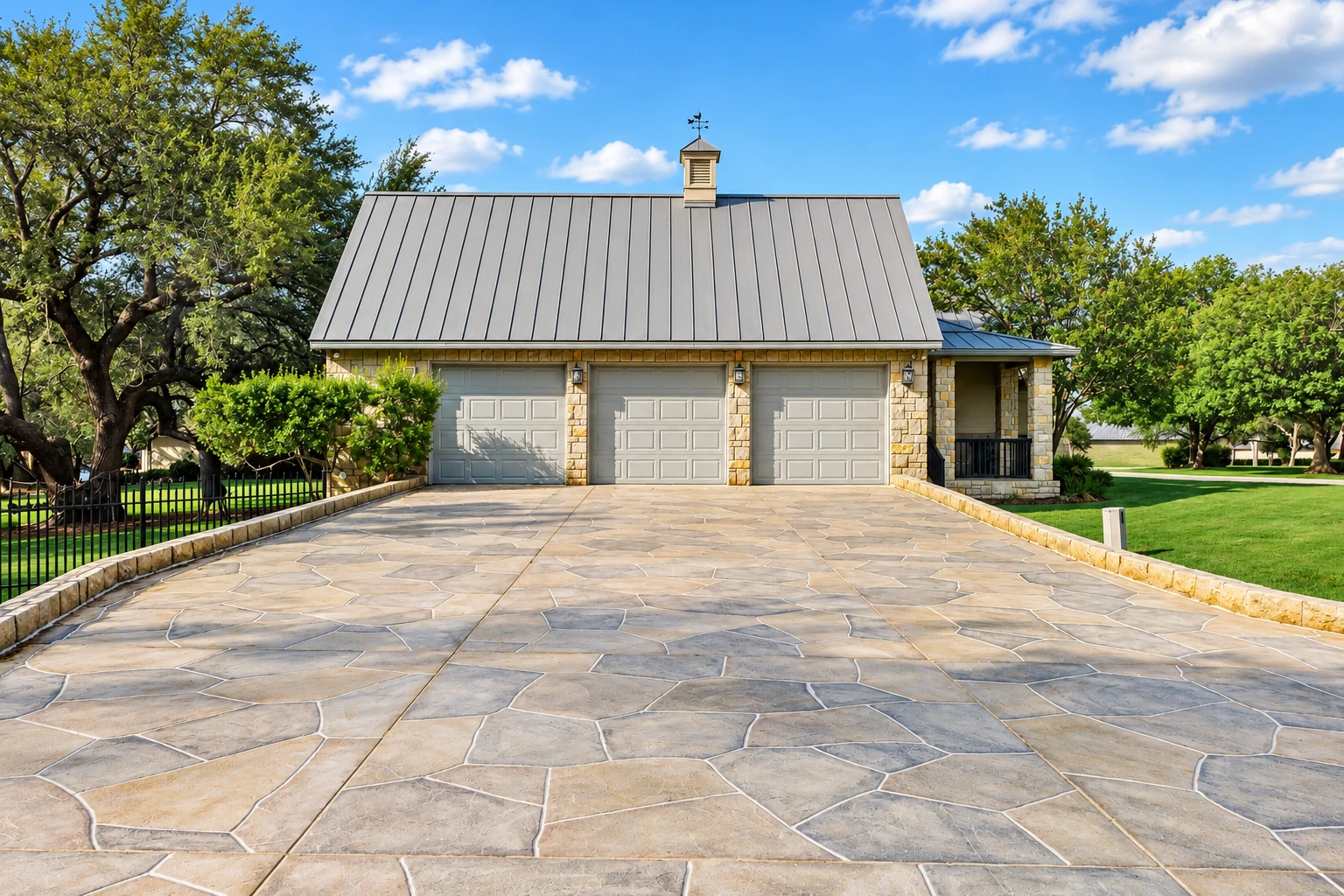
Decorative concrete driveway with an irregular flagstone pattern leads to a three-car stone garage.

Decorative concrete in Manteca is a new slab for your patio, path or driveway that we color, press with a pattern while it's still soft and then seal, so it looks like stone, brick, wood or tile instead of plain gray.

How does stamped and colored concrete work in Manteca?

Every decorative finish comes down to three parts, the color, the texture and the seal. Under all three it's still flatwork, the trade's word for flat slabs like patios, walks and driveways, so it needs the same ground work as a plain slab. If you're replacing a cracked or sinking slab, the first thing I want to know is why it failed.

The price moves with the size of the area, whether old concrete has to come out first, how much digging and packing the base needs, the pattern you pick and the color method. The schedule turns on the tear-out, the base work, any permit the city or county asks for and the curing time before you walk or drive on it. Your estimate puts that scope in writing.

Picking the color method and pattern

Color goes into a stamped slab one of two ways, and the right one depends on whether people or cars will use it. After that come the pattern and the seal.

Color mixed all the way through

Integral color is pigment mixed through the full depth of the concrete, so a chip or a saw cut shows the same color underneath. It won't give you the deepest or brightest tones, but it's the most forgiving choice and ages without pale scars, which suits most patios and paths.

Color hardener on top

Color hardener is a dry mix of extra cement and sand that we spread and work into the top of the fresh slab. It gives a richer color and a harder, denser surface, which is why it's the usual pick for driveways. We spread it evenly because uneven work comes out blotchy.

Pattern and seal

While the concrete's still soft, we press rubber mats into it to give the stone, brick, wood or tile look you picked. The seal goes on last to protect the color and the texture, and it's the part you'll renew every so often as regular upkeep.

What happens when you call about decorative concrete?

From the first call to the last cleanup, you'll know who's doing what. I handle the visit and the estimate myself, and our crew lead runs the work on site.

  1. 1

    Call or send a request

    Call (209) 707-1014 or use our contact form. It helps to have the rough size of the area, whether it's a patio, path or driveway, and the look you have in mind.

  2. 2

    I walk the job with you

    I come out myself, ask what the slab needs to handle and check where the water runs and what's around it. Then I write up the scope and price so you can compare it with other bids.

  3. 3

    We prep, pour and stamp

    Once you say yes, we take care of any permits the job needs. Our crew lead and crew dig out and pack the base, form and pour, add the color, stamp the pattern and cut the joints, and I check in as it goes.

  4. 4

    Let it cure, then use it

    We clean up, and the slab cures, the slow hardening that gives concrete its strength, before it takes feet and later cars. I'll tell you those days for your slab and when the seal goes on.

Request an estimate

How we plan and pour decorative concrete

Before we talk colors, I ask whether this is a patio, a path or a driveway, because the color method should match the traffic. A patio that gets chairs and bare feet does fine with integral color. A driveway with tires turning on it every day usually does better with the tougher surface color hardener gives.

A decorative top can't hide a weak base, so the base gets the same care as the color. We dig out and pack the subgrade, the soil the slab sits on, pour the thickness the use calls for and set rebar, steel bars that hold the slab together if it cracks, sized to the job. We also check where the water runs so the slab falls away from your house.

We plan the pour so finishing doesn't land in the hottest part of the day, because a top that dries too fast turns weak and dusty later. Control joints are shallow cuts that give the slab a planned place to crack, and we cut them on time so any cracks follow lines we chose instead of wandering across your pattern.

When a budget gets tight, the base is the first thing people want to trim, because nobody sees it on day one. I'd rather you pick a simpler pattern than skimp underneath, since a nice finish on dirt that was only raked level settles right along with the dirt. That's what I learned fixing other people's sunken slabs.

Some yards need work before the decorative slab goes in. If the spot slopes, a concrete retaining wall can hold the soil back and give you a level place for the patio. If what you really want is a solid slab inside a garage or shop, that's concrete floor installation, which we plan for indoor use.
Pattern across the whole slab

A full stamp covers every foot of the slab with the stone, brick, wood or tile look. It makes the strongest impression on a patio, and it means more stamping work and more surface to reseal.

Stamped border, broom center

A stamped border around a broom finish center, a lightly brushed texture that gives shoes and tires grip, keeps the decorative look at the edges. It's a common way to put more of the budget into the base.

Get a written estimate for your decorative slab

We reply to every call and request within one business day. I'll set a time to come out myself, look at the spot and ask how you'll use it, then put a free estimate in writing. There's no obligation and no pressure to book.

(209) 707-1014

support@mantecaconcretemasonry.com

Building decorative patios and driveways in Manteca

The City of Manteca exempts patio slabs with no roof over them, paths and driveways from a building permit when they sit no more than 30 inches above grade and aren't over a basement. That doesn't end the rules. The slab still has to meet setback and zoning limits, which the city's Planning Division explains at 209-456-8500, and adding lights or a water line can bring separate permits.

The strip between the sidewalk and your front property line, generally two feet or more, counts as city right-of-way, so a driveway that meets the sidewalk needs proper permits there. Street work may also need an encroachment permit from Public Works at 209-456-8580. When a job needs a permit, we handle the paperwork and set up the inspections, and we check with the city or county on every project.

We're based in Manteca and work in the cities around it in San Joaquin and Stanislaus counties, including Lathrop and Ripon. On jobs around here I see a lot of patios that sank, walks cracked every which way and water pooling against the house, and my first question is always why it happened.

Why Manteca homeowners call Prime Manteca Concrete for decorative work

I spent years on upkeep for a property management company, fixing cracked walks and sunken slabs, and I wanted to know why the same problems kept coming back. I learned the trade on real jobs and started Prime Manteca Concrete in Manteca in 2021. Homeowners call us, and so do landlords and small property owners who need concrete that holds up to everyday use.

We're fully licensed and insured. California's concrete contractor license covers forming, pouring and finishing flat concrete work, and the city advises hiring only licensed contractors. I come out and write the estimate myself, and our crew lead and crew do the work. We back it with one promise, satisfaction guaranteed on every job. Call (209) 707-1014 or send us a request to get started.

Concrete retaining walls

A sloped yard often needs a wall to hold the soil back before a flat patio or path can go exactly where you want it.

Concrete floor installation

If you need a solid slab inside a garage, shop or addition, that's floor work planned for indoor use rather than a backyard finish.

Cities we serve around Manteca

We pour decorative concrete in Manteca and the cities around it in San Joaquin and Stanislaus counties. If you don't see your city on the list, give us a call and ask.

Decorative concrete questions from Manteca homeowners

Do I need a building permit for a stamped patio in Manteca?

The city exempts a flat stamped patio with no roof over it from a building permit when it meets the height and basement limits described above. A cover, lights or a water line can bring separate permits, and setbacks still apply, so we check with the city on each project before we pour.

Which color method is best for a stamped concrete driveway?

Color hardener is the usual choice for a driveway, because it gives the top of the slab a harder, denser surface that stands up to tires. The trade-off is that a deep gouge shows gray concrete underneath, while integral color looks the same all the way through. I'll talk through both when I see your driveway.

How much does decorative concrete cost in Manteca?

We price each job after I've looked at the spot, because the size, the base work and the finish you pick move the number more than anything else. Tearing out an old slab, a full-surface pattern and color hardener add cost, while a stamped border with a plain center brings it down. Your written estimate spells out the scope.

How often does stamped concrete need to be resealed?

One colored concrete maker advises inspecting, cleaning and resealing colored concrete every 18 to 36 months, depending on traffic. A patio with light use can lean toward the long end, and a driveway usually needs it sooner. Plan it as regular upkeep and the color keeps its look longer.

Why does my new colored concrete look darker than expected?

Tinted concrete can look uneven and a little darker until it's fully cured, according to one maker, which advises allowing 28 days for that final cure. The color usually evens out as the slab finishes curing, so it's worth waiting out that month before judging the result.

How do I check a concrete contractor's license in California?

You can look up a contractor's license number on the state licensing board's site or by calling 800-321-2752. The city also advises getting at least three bids and three references, looking at past work, and signing a written contract with no more than 10% or $1,000 down, whichever is less.

What should I do to get ready for a stamped concrete pour?

Clear the area of furniture, pots and anything you want to keep, and leave a clear path for the truck or wheelbarrows. Mark any sprinkler heads or lines you know about, and plan to keep kids, pets and cars off the slab until I tell you it's ready.

Call about your decorative patio or driveway

We take calls seven days a week from 7 AM to 11 PM, so reach us at (209) 707-1014 or use the form whenever it suits you.

(209) 707-1014Request an estimate