Concrete driveway building
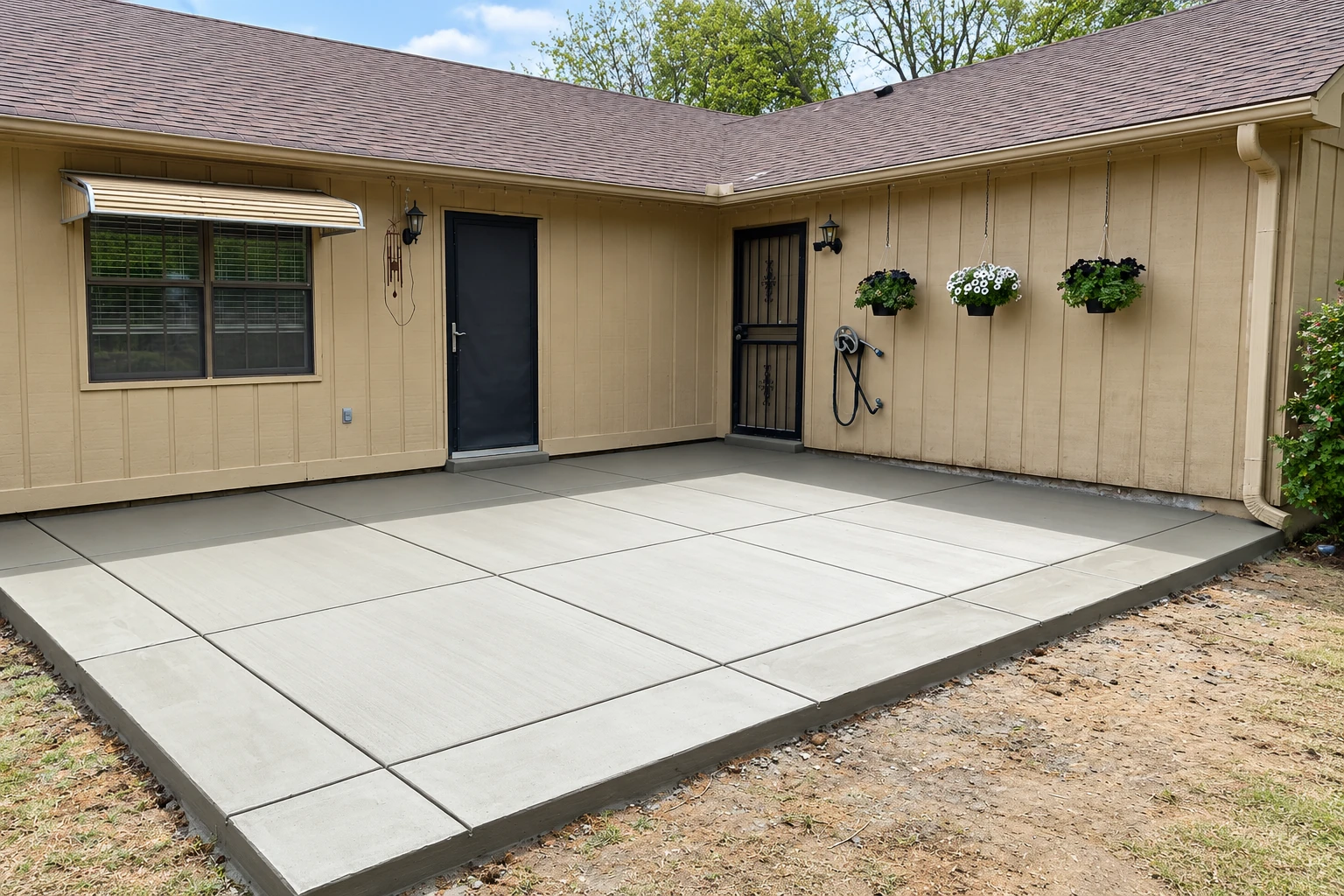
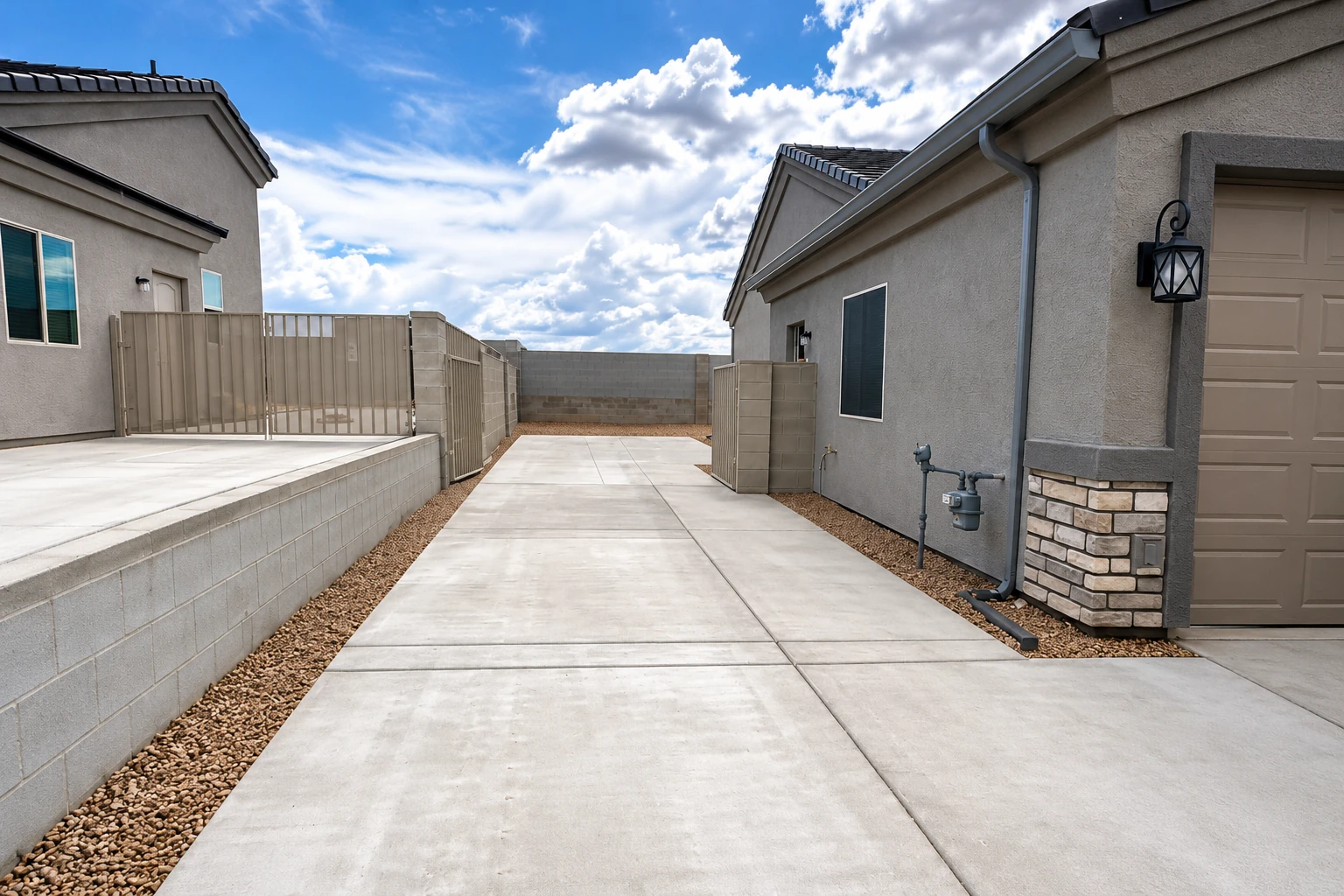
When a driveway has cracked across or sunk at the garage lip, we tear it out, dig down to firm ground, pack a new base and pour the slab.
Prime Manteca Concrete is a concrete contractor serving Tracy, CA. We pour driveways, patios, walkways, steps and foundations around Tracy, and we start by working out why the old concrete cracked or sank before we pour anything new.
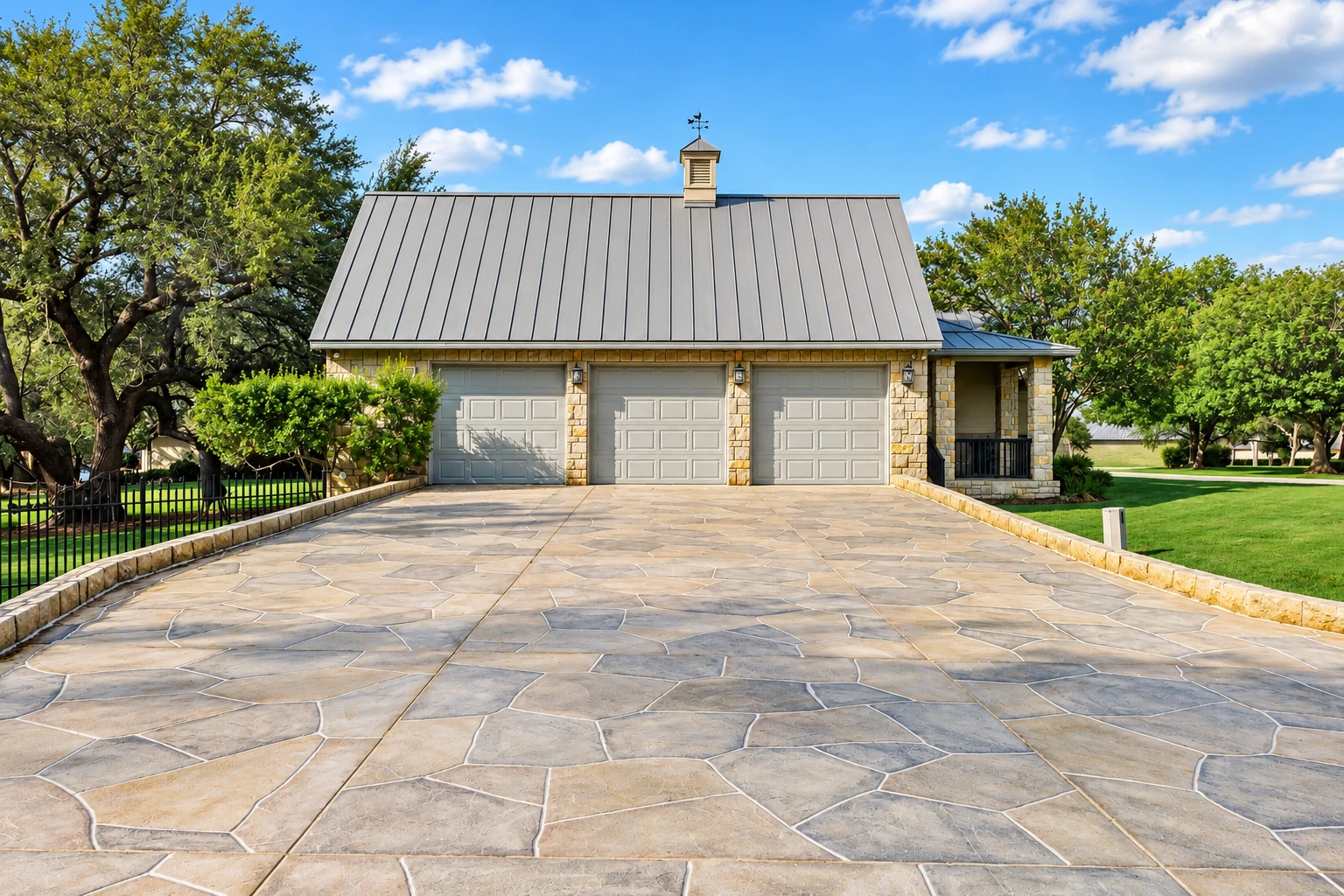
Prime Manteca Concrete is a concrete contractor in Manteca, CA, and Tracy is one of the cities we drive out to for driveways, patios, walkways, steps, garage floors and foundation work. Most calls start with something you can see, like a cracked walk, a slab that's sinking or water pooling by the garage.
When I come out to a house in Tracy, the first thing I want to know is why the old concrete gave up. A driveway that cracked straight across, a patio that tipped toward the back door and a walk that lifted at one seam each point to something different underneath, and pouring over the same problem just buys you the same repair later.
Homeowners call us, and so do landlords and small property owners whose rentals put concrete through hard daily use. Those jobs are usually about holding up more than looking fancy. We get the same kinds of calls in Lathrop and back home in Manteca, so the crew that comes to Tracy already knows the ground and the houses around here.
When a driveway has cracked across or sunk at the garage lip, we tear it out, dig down to firm ground, pack a new base and pour the slab.
A new patio helps when the old one tips toward the house or the yard stays muddy, because we set the fall so water runs away from your walls.
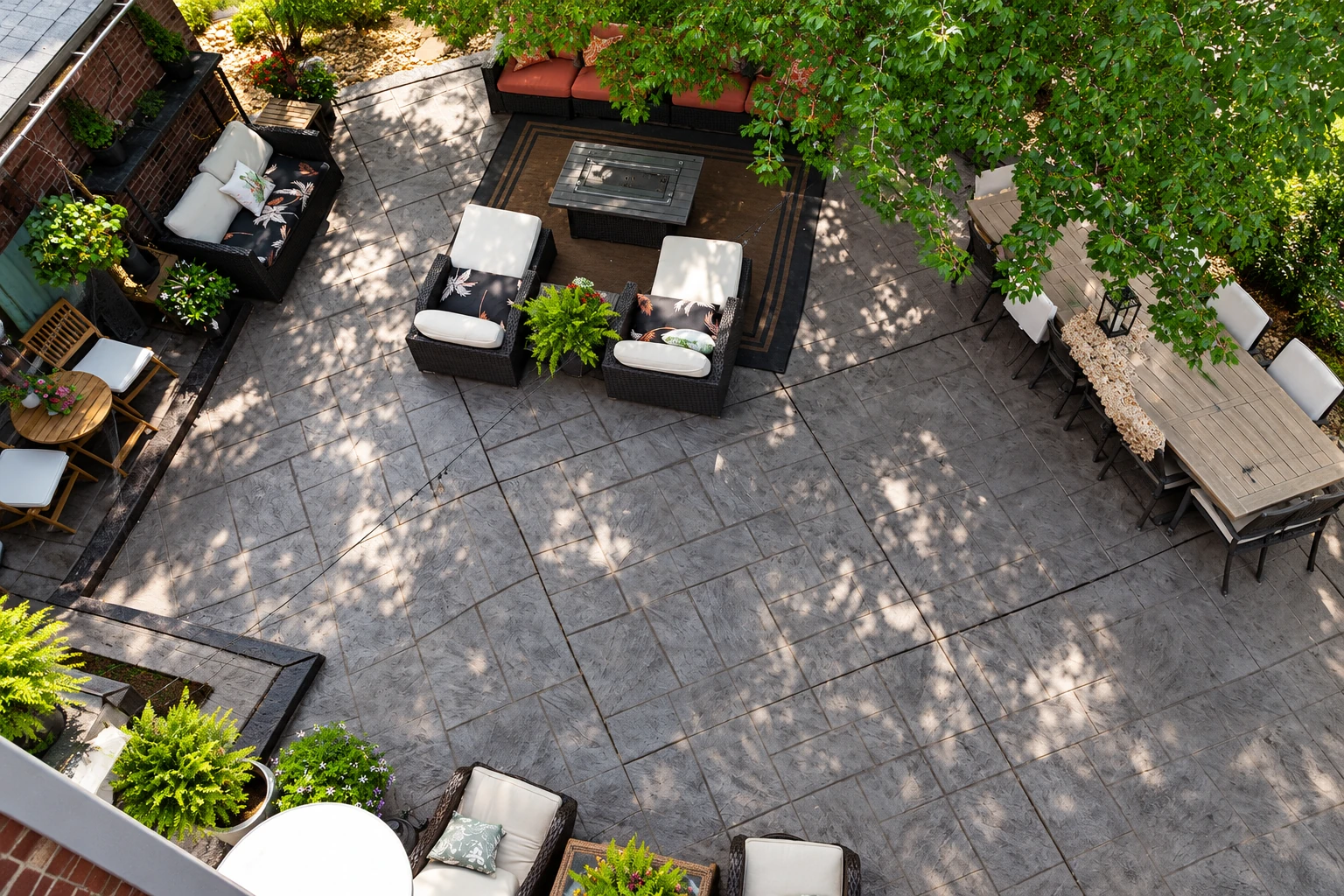
Stamped concrete gives a patio or walk the look of stone or brick in one pour, and it holds up better when the base underneath is done right.
Walks that have lifted or broken into pieces are easy to trip on, so we replace the bad sections and slope the new ones so water runs off.
A garage floor that's cracked, stained or sunk in spots can be broken out and repoured on a base packed firm enough for cars and storage.
Decorative concrete covers color, exposed stone and custom borders, which helps when you want a front walk or patio that suits the house instead of plain gray.
On lots with a grade change, a concrete retaining wall holds the soil back, and we plan drainage behind it so water pressure doesn't push it over.
We pour interior slabs for shops, sheds and additions, setting the base, the steel and the finish around how the room will actually get used.
Pool decks need grip when wet, so we give them a broom finish, a brushed texture your feet can hold, and slope them so splash water runs away.
Front and back steps that have cracked or pulled away from the house get rebuilt with even risers, so nobody misjudges a step coming out the door.
For an addition, garage or outbuilding, we build the slab foundation on a dug-out, packed base, because that ground carries the whole building above it.
New foundations start with the ground, so we dig, form and pour to the plans and set up whatever inspections the job calls for.
Landlords and small property owners call us for parking areas where cars turn and park all day, which takes a heavier base than a home driveway.
Footings carry the weight of walls, posts and patio covers, so we size and pour them to the plans and to the soil we find when we dig.
When part of a slab or foundation has dropped, raising it can bring it back closer to level, once we've found out what made the ground give way.
We cut concrete to open a slab for plumbing, to remove a damaged section cleanly or to add joints where an older slab never had them.
Send the form and we'll reply within one business day to set a time for me to come out to your place in Tracy. I'll walk the job, ask what the concrete needs to handle and put the scope in writing so you can compare it with other bids. There's no obligation and no pressure to book.
(209) 707-1014In Tracy, building permits come from the city's Building Safety Division, and whether your concrete job needs one is their call, so if you're unsure, you can ask them at (209) 831-6400. Every permit starts with a Building Permit Application. When plans are required, the plan check fee is paid before anyone reviews them, so a permitted job waits on that review and the permit before we dig.
Before you hire anyone, check two licenses. The California Contractors State License Board licenses the contractors who build or alter structures here, and we're fully licensed and insured. The city also requires anyone earning income inside Tracy's city limits to pay its business license tax before starting work, but that's a tax certificate, not a check on skill, so the state license is the one that speaks to the trade.
When a job needs a permit, we handle the paperwork with the city and set up the inspections, checking with them on every project since the steps here aren't the same as in Ceres. Price moves with the slab's size, the old concrete coming out, the base work your soil needs and the finish. The schedule turns on permit review and weather, and your written estimate lays out the scope.
I spent years doing upkeep for a property management company, and a lot of that was cracked walks, sunken slabs and water pooling where it shouldn't. The same problems kept coming back, so I learned the concrete trade on real jobs and started this business in Manteca in 2021. We're best known for figuring out why old concrete failed before we pour the new.
The base is the part you can't see once we're done, and it's the first thing people want to trim from a budget because a nice finish shows and packed gravel doesn't. I'd rather spend the time digging out soft dirt, packing the subgrade the slab rests on and checking where the water runs, because a pretty surface over a weak base brings the same trouble back.
Our crew lead and crew do the forming, pouring and finishing, and I check in on the work as it goes so nothing gets rushed. Satisfaction guaranteed on every job. To get on my schedule, call (209) 707-1014 or use the request form.
The city's own building rules describe the ground and the weather around Tracy, and both show up in how a slab holds up. Here's what each one changes about how we build.
The city's code findings note that soils around Tracy can swell and shrink enough to shift slabs and cause serious damage. That's often why an old driveway cracked or a patio tipped. We dig out soft and loose dirt, pack the base firm and keep water from soaking in under the edges, because wet soil is the soil that moves most.
The same findings say corrosive soils are common in and around the city. That matters for rebar, the steel bars that hold a slab together if it cracks, because steel sitting too close to the dirt can rust and swell inside the concrete. We set the steel up off the ground so concrete covers it on every side.
The city describes Tracy as having warm, dry summers and strong winds. Both pull water out of fresh concrete fast, and curing, the slow hardening that gives concrete its strength, needs that water. A top that dries too soon can end up weak and dusty, so in summer we pour early in the day and keep the surface damp while it cures.
Water pooling by the garage or along the house is a call we get a lot, and with soil that moves when it's wet, it's worth fixing right. Before we form anything, I check which way the yard drains and set the new slab to fall away from your house, toward the yard or the street.
Your price comes from what I find on site, mostly how big the driveway is, whether the old one has to be broken out and hauled off, and how much soft soil needs digging out before we can pack a base. Stamped or colored finishes cost more than plain concrete. There's more on the work itself on our concrete driveway page.
Under the state licensing board's rules, a contractor needs a license when the job needs a building permit, uses any additional workers, or when labor and materials on the project add up to $1,000 or more. A bigger job can't be split into smaller contracts to stay under that line, so ask every bidder for their license.
The state licensing board caps a down payment on a home improvement job at $1,000 or 10 percent of the contract price, whichever is less. That covers all home improvement work, so a driveway or patio falls under it like any other project. If a bid asks for more up front, ask why before you sign.
Clear the area of cars, furniture, pots and anything stored against the house, and leave a path for our wheelbarrows or the truck. Tell us where sprinkler lines and buried wiring run, because we'll be digging down to firm ground. On pour day, keep pets and kids inside so the wet concrete stays untouched.
You'll be back on it on foot well before you can park on it, because new concrete keeps getting stronger as it cures and tire weight too early can crack it. How soon depends on the mix and the weather on your pour, so we'll tell you the dates for your slab before we leave.
Concrete can still crack, but most of the bad cracking we see comes from a weak base, water getting underneath or joints cut too late. We pack the base, slope the slab away from the house and cut control joints, shallow grooves that give the slab a straight place to crack, early enough that cracks usually follow the lines we chose.
Call (209) 707-1014 any day between 7 AM and 11 PM, or send the request form with a few words about the cracking, sinking or pooling, so I know what to look for when I come out.