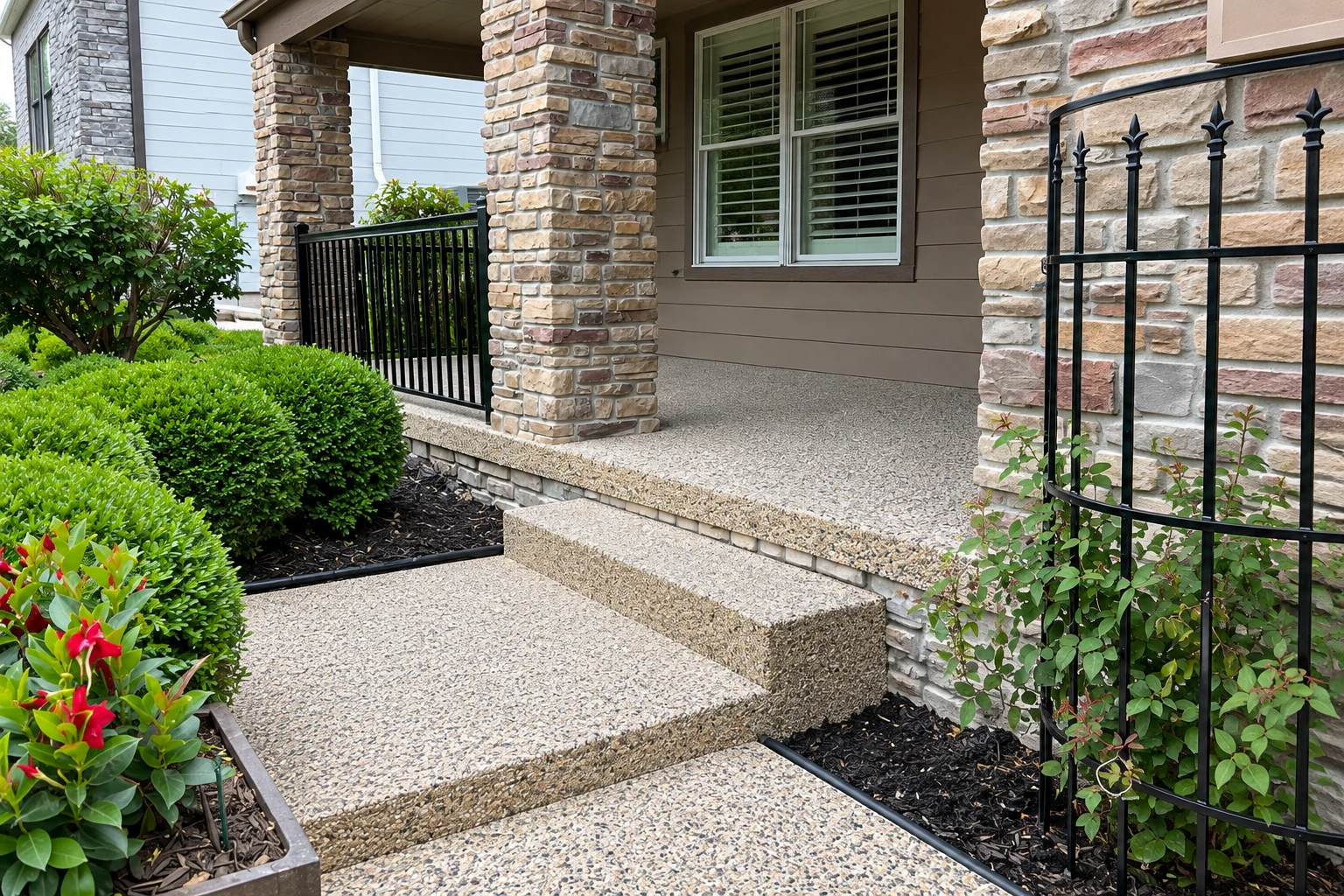
We'll talk through poured or precast with you, and either way the base under the steps gets as much attention as the steps do. Precast steps are heavy, so they can sink into loose ground, and the hollow units can shift if the pad under them settles. One precast maker's manual calls for compacted gravel and a reinforced pad under multi-step units, so ask any contractor how they'll build that base.
The base is also the easiest place to cut corners, because nobody sees it once the steps are in. A nice finish on a rushed base is a trade I won't make. If the budget's tight, I'd rather put the money into packed gravel and a solid pad and keep the finish simple, because plain steps on a good base will serve you longer than fancy ones that tip.
When old steps come out, I check the sill behind them, since that's where water tends to get in. Water running behind old steps can rot a wooden sill, and it's much better to find and fix that now than to set new concrete against it. Leave a little room in your budget in case we find rot.
How the old steps come out depends on what you have now. Old precast steps can often be lifted out in one piece, while poured steps have to be broken up and hauled away. Steps are often part of a bigger project, too. If you're adding a room that needs slab foundation building or foundation installation, we can plan the steps along with it.