Prime Manteca ConcretePrime Manteca Concrete

Concrete Sidewalk Building in Manteca CA - a walk that stays level underfoot

Cracked, lifted or sinking walk by the house? We find what moved it, then pour a new one on ground that's packed firm.

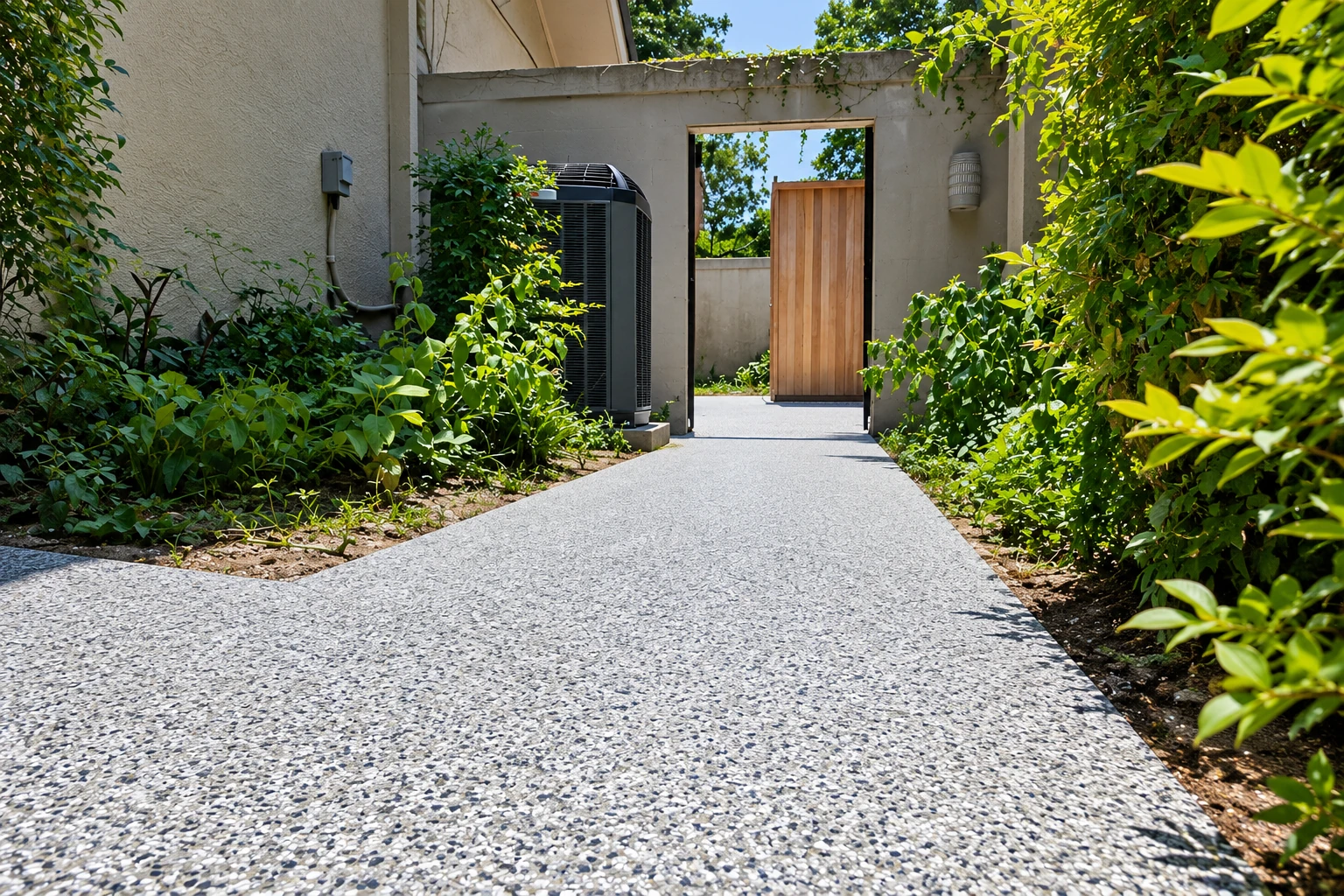
A speckled concrete walkway runs through a leafy side yard toward an open wooden gate.

Concrete sidewalk building in Manteca starts below the surface. We clear out the topsoil, roots and loose dirt and pack the ground firm, then form, pour and finish a new walk on solid ground.

What does it take to build a concrete sidewalk in Manteca?

Most calls start with a walk that's already giving trouble. Maybe a tree root lifted a panel, a section sank by the downspout, or a low spot holds water after the sprinklers run. Other times you just need a new path from the driveway to the front door. Either way, at Prime Manteca Concrete I'd rather find out why the old walk moved before we talk about what to pour next.

The price moves with the length and width of the walk, how much old concrete we break out and haul away, how much digging and fill the ground needs, and whether a car crosses it, since that stretch has to be thicker. The schedule turns on the weather and on whether the city or county wants a permit for your job. Your estimate spells out the scope for your walk in writing.

What keeps a new walk from heaving or sinking

Most of what decides how a walk holds up is settled before any concrete shows up. These are the three things I look at hardest on a sidewalk job.

Packed ground, not raked dirt

The subgrade, the ground the walk sits on, is where most failures start. We dig out the topsoil and anything that will rot, then pack the fill firm so it doesn't settle under the slab later. Loose dirt raked level looks the same on pour day, but it can sink once it gets wet.

A route around roots and low spots

Tree roots and soil that swells and shrinks move a walk more than a weak mix does, so the path matters more than extra strength. We keep the route off low spots that collect water and slope it so runoff heads away from your house, not toward it.

Thicker where cars cross

Any spot where a car rolls over the walk, like the end of a driveway, may need a thicker section or rebar, steel bars that help hold the concrete together. We also keep the support even where the walk crosses utility lines, so one stretch doesn't sit softer than the rest.

What happens when you call about a new sidewalk?

From the first call to the last sweep of the broom, here's who does what. I handle the visit and the estimate myself, and our crew lead runs the job once you say yes.

  1. 1

    Call or send a request

    Call (209) 707-1014 or use our contact form and tell us a little about the walk. We'll get back to you and set up a time for me to come out.

  2. 2

    Walk the route with me

    I come out myself, ask what the walk needs to handle, and look at roots, low spots, drainage and any car crossing. Then I write up the scope and price so you can compare it with other bids.

  3. 3

    We prep, form and pour

    Once you say yes, we take care of any permits the job needs. Our crew lead and crew dig out, pack the base, set the forms, pour and finish, and I check in as the work goes.

  4. 4

    Let it cure, then use it

    Our crew lead runs the job through cleanup. Curing is the wait while the concrete gains strength, so stay off it until the crew lead says it's ready, which keeps the surface from marking or cracking early.

Request an estimate

How we approach concrete sidewalk building

Where a walk runs and what's under it matter more than how strong the concrete is. So before anything else, I look for roots, low spots and anywhere a car will cross, because those are the places a walk gets pushed around. When an old walk lifted or sank, we figure out what pushed it before we pour new, or the same thing tends to happen again.

The base is the part you won't see once we're done, which is exactly why it's the first thing that gets trimmed when a budget's tight. I'd rather keep the digging and packing and go simpler on the finish, because a nice surface on soft ground still cracks and sinks, and you can't fix the ground later without tearing the walk out.

A walk often ties into other concrete around the house. If the slab inside your garage is cracked or uneven too, we can talk about garage floor concrete on the same visit. If you'd like the walk to have color or a pattern instead of plain gray, that's decorative concrete, and we'll go over how it holds up underfoot.

Concrete shrinks as it dries, so some cracking is normal. Control joints are the grooves we cut across the walk to give it a planned place to crack, in a straight line down in the groove. Cut late or skipped, they leave cracks wandering wherever the slab chooses, so we mark where they go before the pour and cut them on time.
Replace just the bad panels

If only a few sections lifted or sank and the cause is something we can fix, like one root or one washed-out spot, replacing those panels costs less and leaves the rest of the walk alone.

Redo the whole walk

If the walk sits on poor fill from end to end, or the route itself sends water toward the house, patching just chases the problem. Starting over lets us fix the ground and the route together.

Get a written scope and price for your walk

Send the form and we'll reply within one business day to set up a time. I'll come out, walk the route with you and write up a free on-site estimate. There's no pressure to book.

(209) 707-1014

support@mantecaconcretemasonry.com

Concrete walks and driveway work in Manteca

Whether your walk needs a permit is up to the city or county, so we check with them on every project. In Manteca, the city handles encroachment permits and posts the insurance requirements applicants have to meet. When a job does need a permit, we handle the paperwork for you.

When a walk is built to the city's standards, its specifications call for a fine hair broom finish after the concrete is smoothed with a steel trowel. That light texture gives your shoes some grip when the walk is wet. The specifications also point builders to the city's standard plans for where the joints and score lines go, so we lay those out to match.

Around Manteca and over in Lathrop and Ripon, a lot of our sidewalk calls come from homeowners and landlords with walks pushed up by tree roots or sunk where the fill gave way. The fix looks about the same from one city to the next. We find out what moved the old walk, then build the new one on ground that holds.

Why Manteca homeowners call Prime Manteca Concrete for sidewalks

I spent years doing upkeep for a property management company, and a lot of that work was cracked walks and sunken slabs that kept coming back. I learned the concrete trade on real jobs and started this business in Manteca in 2021 to fix the cause, not just the surface. Landlords and small property owners call us for the same reason homeowners do.

I come out to look at your walk and write the estimate myself, so the person asking the questions is the one who answers for the job. We're fully licensed and insured. Satisfaction guaranteed on every job. If your walk needs fixing or you're planning a new one, call (209) 707-1014 or send us a request and I'll come take a look.

Garage floor concrete

A cracked or uneven garage slab often has the same trouble as the walk outside it, soft ground or water running the wrong way, and we can check both.

Decorative concrete

If plain gray doesn't suit the front of your house, color, patterns and textured finishes can give a walk or patio a different look on the same solid base.

Cities we serve around Manteca

We're based in Manteca and build walks in the cities around it across San Joaquin and Stanislaus counties. If your city isn't on the list below, give us a call and ask.

Questions about new sidewalks in Manteca

How much does a new concrete sidewalk cost in Manteca?

Installing a concrete sidewalk across the US usually costs about $12 to $14.50 per square foot. That's a national range for the installed walk, not our quote, and the things covered above, like tear-out, ground prep and car crossings, decide where yours lands. I'll put your number in writing after I walk the route.

Can someone without a contractor's license pour a small walk in California?

Only on very small jobs. State rules let an unlicensed worker do minor work up to $1,000, and only when the job needs no permit and the worker employs no one. Beyond that, the state licensing board counts forming, pouring and finishing flat concrete as concrete contractor work.

When is the best time to pour a concrete sidewalk in Manteca?

In summer, a cooler part of the day or night is the better time to pour. Manteca's hot, dry summers make concrete set faster, which makes it harder to finish and more likely to crack from shrinkage and heat. Hot-weather guidance also calls for keeping fresh concrete from drying out while it cures, so it's worth planning the pour around both.

Why does an old concrete sidewalk lift or sink?

Usually something underneath moved it, like growing tree roots, soil washing out, fill that was never packed, or water draining the wrong way. A heaved or sunk panel is a trip hazard, and grinding down the raised edge only hides it, because whatever pushed the panel is still there. That's why I look for the cause first.

What should I have ready for a concrete sidewalk estimate?

Have the route you're picturing, a rough length, any spots where a car will cross, and the trees near the path. Those change the ground prep and the thickness more than anything, so knowing them up front makes the visit quicker and the estimate closer to the real job.

Mark your route and give us a call

Call (209) 707-1014 or send a request, because the sooner I see where the walk goes, the sooner we can plan around the roots, the crossings and the summer heat.

(209) 707-1014Request an estimate