Prime Manteca ConcretePrime Manteca Concrete

Concrete parking lot building in Manteca CA - a lot built for the traffic it gets

Lot cracked, sinking or holding water? We build concrete lots around the trucks and cars that use them, on ground made ready for the load.

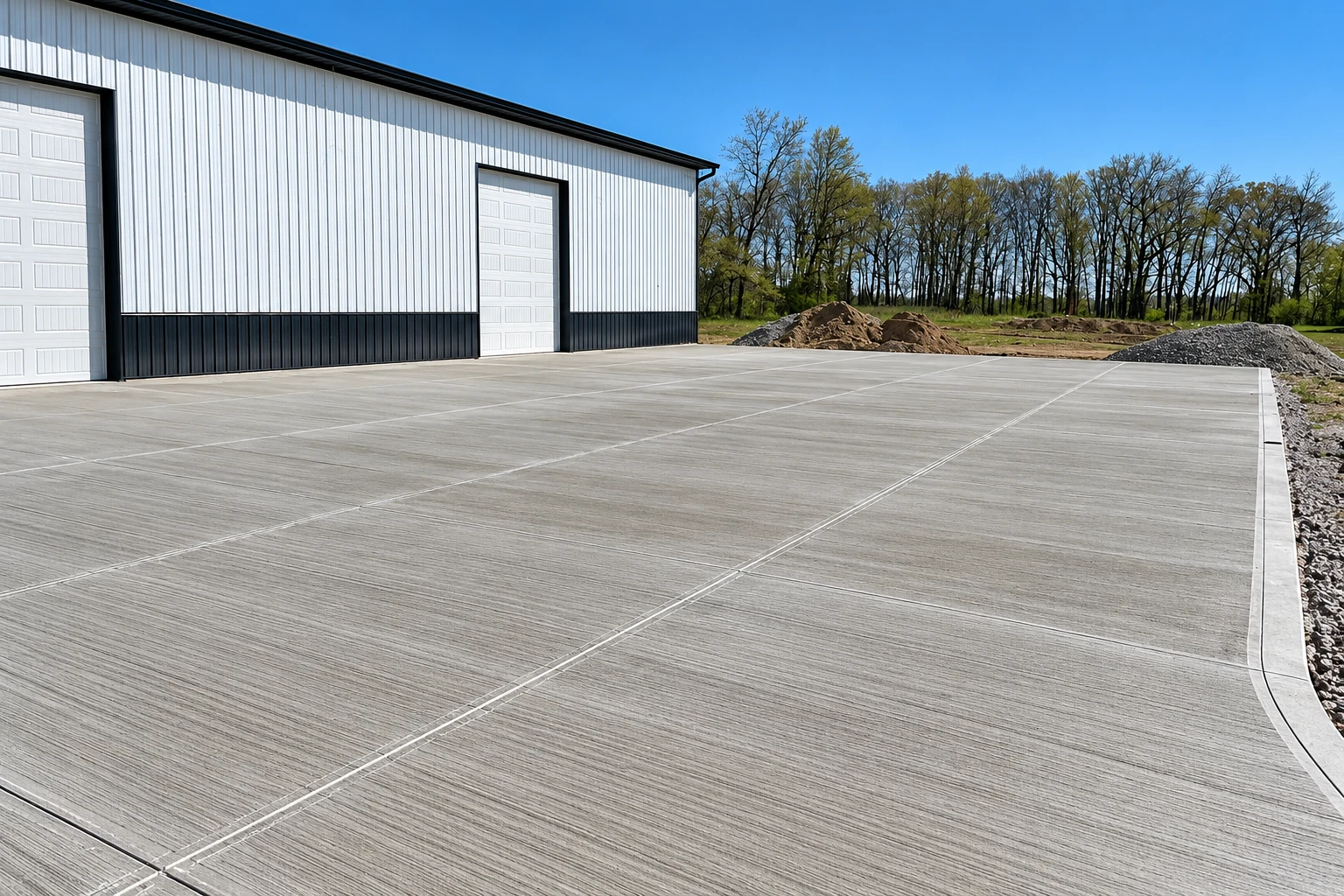
Wide broom-finished concrete driveway with control joints beside a white metal garage building.

Concrete parking lot building in Manteca, CA means we prepare the ground, then form, pour and finish a paved lot laid out for the cars and trucks that actually use it, so it holds up to everyday traffic.

What does it take to build a concrete parking lot in Manteca?

Most calls start with a lot that's cracked, sinking or holding water, or with a patch of bare ground that needs to become parking. Either way, the slab you see is the smaller part of the job. The subgrade, which is the ground the concrete sits on, and the way water leaves the lot decide whether it stays flat, so that's where we start.

Price moves with the lot's size, the heaviest vehicle that'll use it, how much soft ground has to come out and whether old paving gets torn out and hauled away first. The schedule turns on that same prep work, the weather on pour day and the curing wait, the time concrete needs to harden before anyone drives on it. The estimate puts your lot's scope in writing so you can compare it with other bids.

What a parking lot has to handle every day

A parking lot does more than hold parked cars. Trucks pass through, people walk across it, and spills and rain wear on it, and each of those changes how the lot should be planned.

Trucks and cars sharing a lot

Where cars and trucks share a lot, a national industry design guide says steering the heavier trucks away from the car areas makes for a more economical design. Mapping the truck routes early, before the layout is set, can lower the cost of the whole lot, since only those routes have to carry the heaviest loads.

Room for people on foot

Drivers aren't the only ones crossing a parking lot. The same guide suggests asking how a design keeps walkers safe, with crosswalks, a surface texture that isn't slippery and lighting at night. A broom finish, fine ridges dragged into the fresh concrete, is the usual way to give the surface that grip.

Upkeep on a car lot

On a lot that mostly sees cars, the guide says wear from fuel and oil leaks, rain and drainage is often the biggest upkeep concern, more than the weight of the cars. So the care that matters most there is cleaning up spills and keeping water moving off the slab instead of sitting on it.

What happens when you call about a parking lot

From your first call to the day the lot opens, here's who does what. I handle the walk-through and the estimate myself, and our crew lead runs the work.

  1. 1

    Call or send a request

    Call (209) 707-1014 or use the form and tell us a little about the lot, like roughly how big it is and who parks or delivers there. That's enough for us to set up a visit.

  2. 2

    I walk the lot with you

    I come out myself, ask what the lot has to handle and look at what's around it, including the ground, the drainage and any old paving. Then I write up the scope so you can compare it with other bids.

  3. 3

    Our crew builds the lot

    Once you say yes, our crew lead runs the job. The crew digs out and packs the base, sets the forms, pours, finishes and cuts the joints, and I check in on the work as it goes.

  4. 4

    Cleanup and opening day

    The crew lead sees the job through to cleanup and hauls off the forms and debris. We'll let you know when the lot is ready to open and what to keep an eye on in its first months.

Request an estimate

How we handle concrete parking lot building

I start every lot with one question. Who's going to use it? Cars, delivery trucks and garbage trucks put very different loads on concrete, so we lay the lot out with the heavy trucks kept on routes built to carry them and the cars parked on the rest. That plan decides where the pavement has to be strongest before anyone talks about the finish.

Poor ground prep and badly placed joints sink more lots than anything, so that's where I spend my time on the plan. Our crew digs out soft dirt and packs the base instead of raking it level, then sets the forms so water runs away from buildings and off the lot instead of pooling in the parking spaces.

We like to pour early in the day, because concrete placed in midday heat can end up with a weak, dusty top. The crew cuts control joints, shallow lines that give the slab a planned place to crack, before cracks can pick their own spots. Then the concrete cures, and traffic stays off until it's ready.

When a budget gets tight, the base is usually the first thing people want to cut, because nobody sees it once the concrete's down. I'd rather trim something on top than skimp underneath, since a nice surface over a weak base is still a lot that settles with the dirt.

Some lots come with other work attached. Light pole bases, sign posts and small walls sit on concrete footings, and if a building or slab beside the lot has already sunk, foundation raising may need to happen first so the new paving meets it at the right height.

Replacing an old lot

Old paving comes out first, which adds tear-out and hauling to the job. It's also our best clue, because the way an old lot cracked or sank usually shows what the new base and joints need.

Building on bare ground

With nothing to tear out, the work starts with digging out soft soil and packing a solid base. We check where the water goes now, since a new lot changes how rain runs off the whole site.

Get a written estimate for your parking lot

We reply to every call and request within one business day. Estimates are free, done on site and come with no pressure to book. After you send the form, we'll set a time for me to walk the lot with you, and then I'll put the scope in writing so you can compare it with other bids.

(209) 707-1014

support@mantecaconcretemasonry.com

Concrete parking lots and paving work in Manteca

Manteca sets its own stormwater standards for paved areas. In the version from 2015, parking areas with a high risk of pollutants washing off have to be surfaced with Portland cement concrete or something equivalent, and in lower-risk areas the city allows permeable pavement, which lets rain soak through, to cut down on runoff. Those standards can change, so check the current version with the City of Manteca.

The soil type named for Manteca is moderately deep to hardpan, a hard layer below the surface, and moderately well drained, on low terraces. On lots around here, that's why I want to know how deep the hard layer sits and where the water goes before we plan the base, because a slab is only as steady as what's under it.

We're based in Manteca and work in the cities around it in San Joaquin and Stanislaus counties, so the same planning goes into a lot in Lathrop or Stockton. The properties we see run from small rentals to shops with delivery traffic, and the questions don't change. Who uses the lot, and what's underneath it?
Why Manteca property owners call Prime Manteca Concrete for parking lots

I started Prime Manteca Concrete in Manteca in 2021 after years of upkeep work for a property management company, where the same cracked walks, sunken slabs and pooled water kept coming back. That's why we're best known for working out why old concrete failed before we pour new. I come out to look at your lot and write the estimate myself, and I check in while our crew lead and crew form, pour and finish it.

The state licensing board defines a concrete contractor as one who forms, pours, places and finishes pavement and flat concrete work, which is exactly what a parking lot is. We're fully licensed and insured. Satisfaction guaranteed on every job. When you're ready, call (209) 707-1014 or send us a request and tell us about your lot.

Concrete footings

A footing is the buried concrete that keeps a pole, post or wall from leaning, and lots with lighting or signs usually need several of them.

Foundation raising

When the building your lot runs up to has settled, lifting it back first keeps a step or lip from forming where old concrete meets new.

Cities we serve near Manteca

These are the cities with their own page on our site. They're not the only places we work, so if yours isn't listed, call (209) 707-1014 and ask.

Concrete parking lot questions from Manteca owners

How much does a concrete parking lot cost near Manteca?

A concrete slab in the Stockton area usually costs about $7 to $14 per square foot, without staining or stamping. That's the area's going rate, not our price. Your lot's figure moves with the truck traffic it has to carry, the ground prep and whether old paving comes out first, and the estimate puts all of that in writing.

Why do some concrete parking lots crack and sink?

Concrete lots that perform poorly often fail for reasons other than thickness, usually weak support from the ground under the slab or joints spaced and patterned wrong. Joints are the planned lines where concrete is allowed to crack. When you collect bids, ask each contractor how they'll prepare that ground and lay out the joints.

Can a concrete parking lot handle garbage trucks and delivery trucks?

Yes, when it's designed for them. Most lots include driveways, and some of those have to carry fairly heavy loads, so a national industry guide says lots serving garbage trucks, dumpsters or delivery trucks may need special design attention. Tell me which trucks come in and how often, and we'll plan the lot around them.

Do Manteca stormwater rules apply to my parking lot project?

They can if your project creates or replaces hard surface. Manteca's standards as presented in 2015 cover public and private projects that do that, sort them by size from 2,500 to 5,000 square feet up to an acre or more, and leave out routine maintenance. Since those figures are older, check the current rules with the city before you plan.

What should I have ready before getting a parking lot estimate?

Have the lot's rough size, the vehicles that use it, including any garbage or delivery trucks, and whether it's new or replacing old paving. That's enough to plan the walk-through, where I'll look at the ground, the drainage and what's around the lot. Call (209) 707-1014 or send a request to get started.

How long after the pour can cars park on a new concrete lot?

Cars go on once the concrete has cured enough to carry them, and trucks wait longer than cars. Heat and weather change how long that takes, so I'll tell you when cars and when trucks can use the lot once the pour is set.

Tell us who uses your lot

Call (209) 707-1014 any day of the week from 7 AM to 11 PM, or send the form, and a quick note about who parks and delivers there lets the first visit get straight to the plan.

(209) 707-1014Request an estimate