
Concrete driveway building
When your driveway is split, sunk at the garage or holding water, we tear it out, rebuild the base and pour a new slab sloped so water runs off it.
Prime Manteca Concrete pours driveways, patios, walks, steps and foundations for homes and rentals in Garden Acres, CA. We work out why the old concrete failed first, then build the base and slope so water runs away from your house.
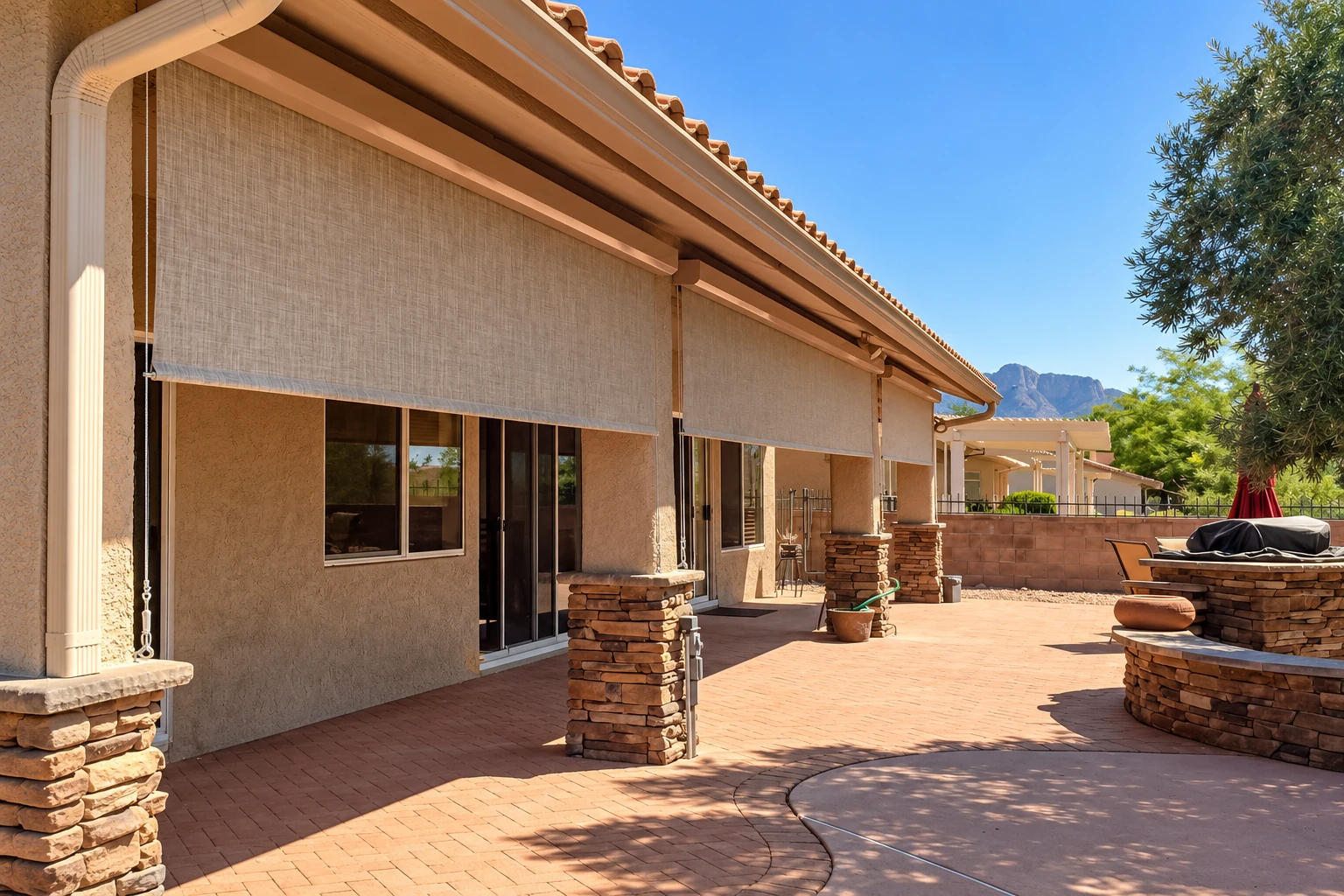
Prime Manteca Concrete handles the full run of concrete work in Garden Acres, from replacing a cracked driveway or sunken patio to pouring footings and slab foundations. Most calls start with something the homeowner can see, like a crack that keeps growing, an uneven walk or water pooling against the house, and we start there too.
A lot of what we see in Garden Acres is older concrete that's done its time. Driveways have split across the middle, walks have lifted or sunk at a joint, and patios hold a puddle after every rain. Before I talk about what to pour, I want to know why the old slab gave out, because pouring the same thing over the same problem just buys you the same cracks.
We work for homeowners here, and for landlords and small property owners whose rentals take hard everyday use. The job is the same either way: dig out to firm ground, pack a new base, set the slope, then pour. We do the same work just over in Country Club and across in Stockton, so the older slabs and flat yards in Garden Acres are familiar to our crew.
When your driveway is split, sunk at the garage or holding water, we tear it out, rebuild the base and pour a new slab sloped so water runs off it.
A patio on flat ground needs a slight fall away from the house, so we set that slope before the pour rather than hoping rain finds its own way.
Stamped concrete gives a patio or walk the look of stone or brick in one pour, and we still build the base under it the same way as plain concrete.
Walks that have heaved or dropped at a joint are a trip waiting to happen, especially at rentals, so we replace the bad sections and match them to what stays.
A cracked or badly settled garage floor can come out and go back in with a smooth finish that sweeps clean and sends water toward the door.
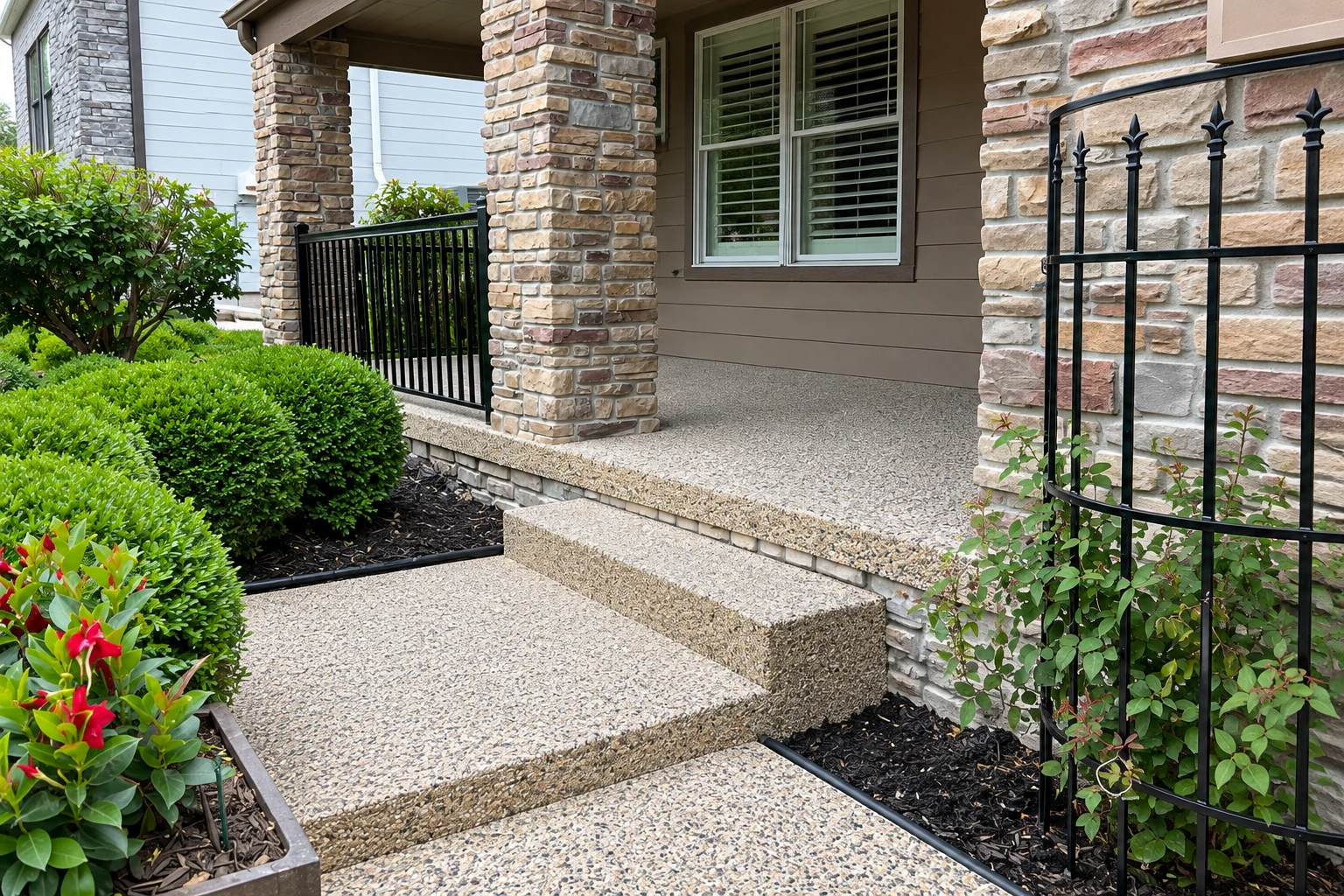
Decorative concrete covers color, exposed aggregate and borders, which suit a front walk or patio where you want more than plain gray without giving up a solid base.
On mostly flat lots, a low concrete retaining wall usually holds a raised bed or a grade change along a driveway, and we plan where the water behind it drains.
For a shop, shed or room addition, we pour the floor over a packed base and a moisture barrier, finished smooth enough for what you plan to use it for.
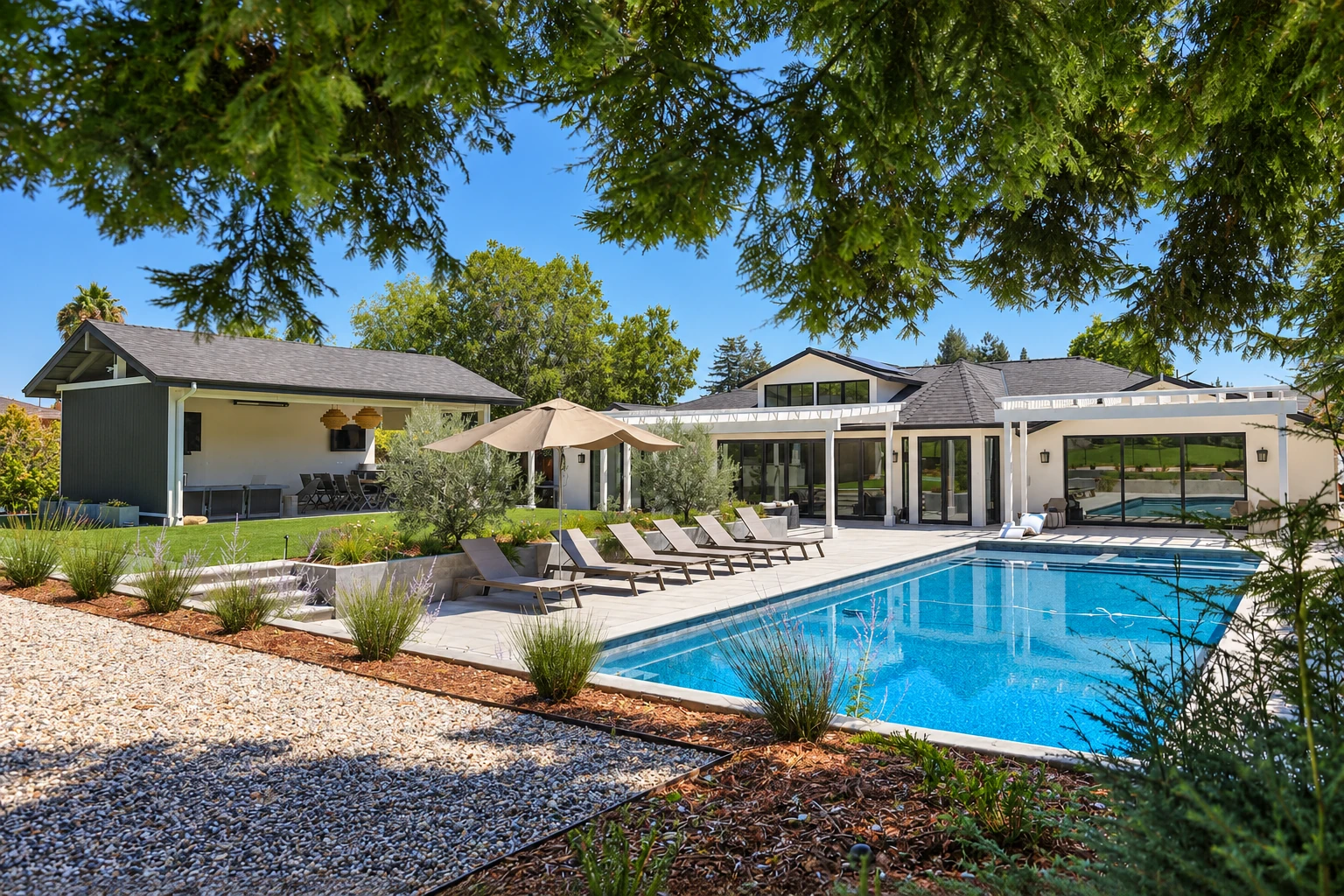
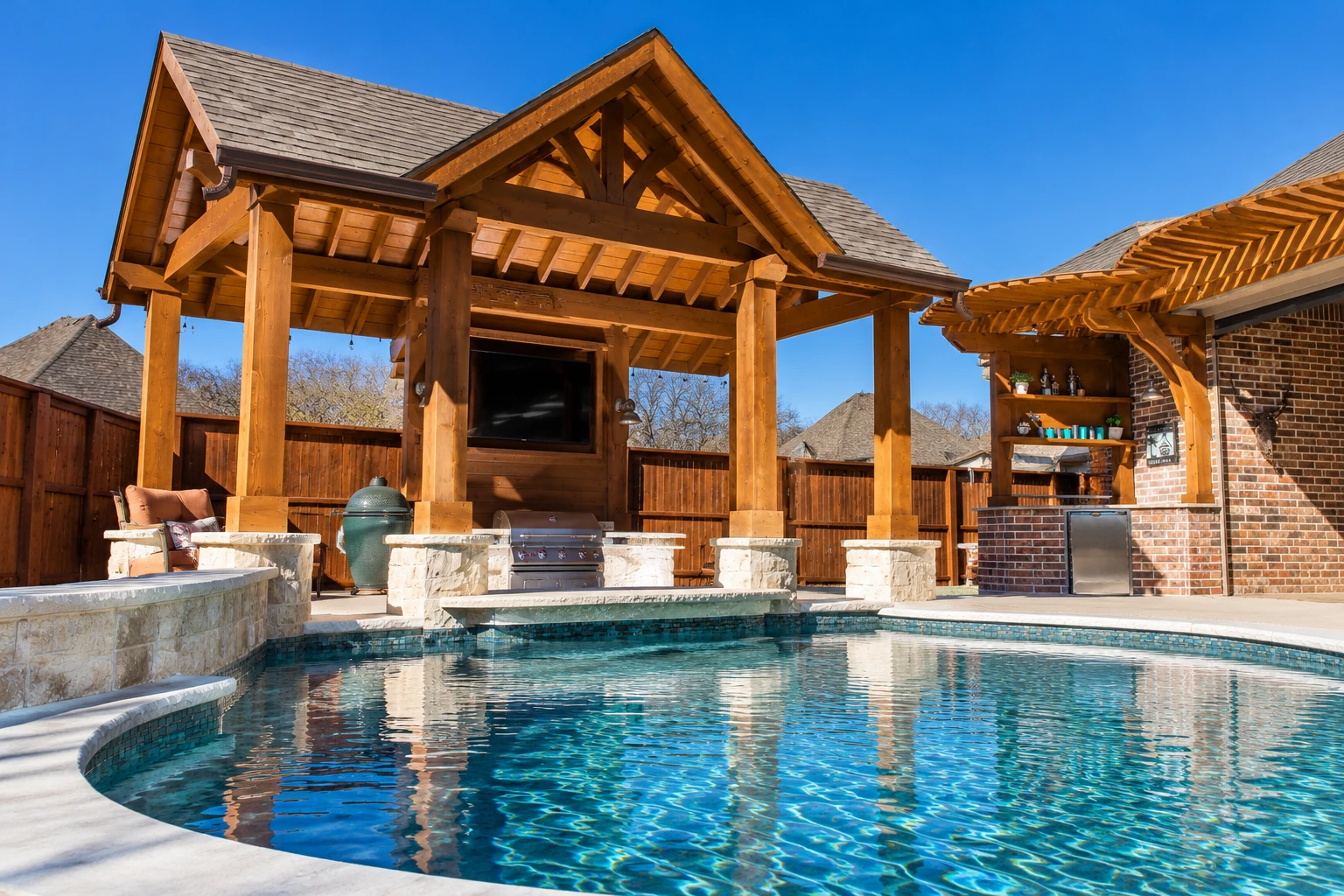
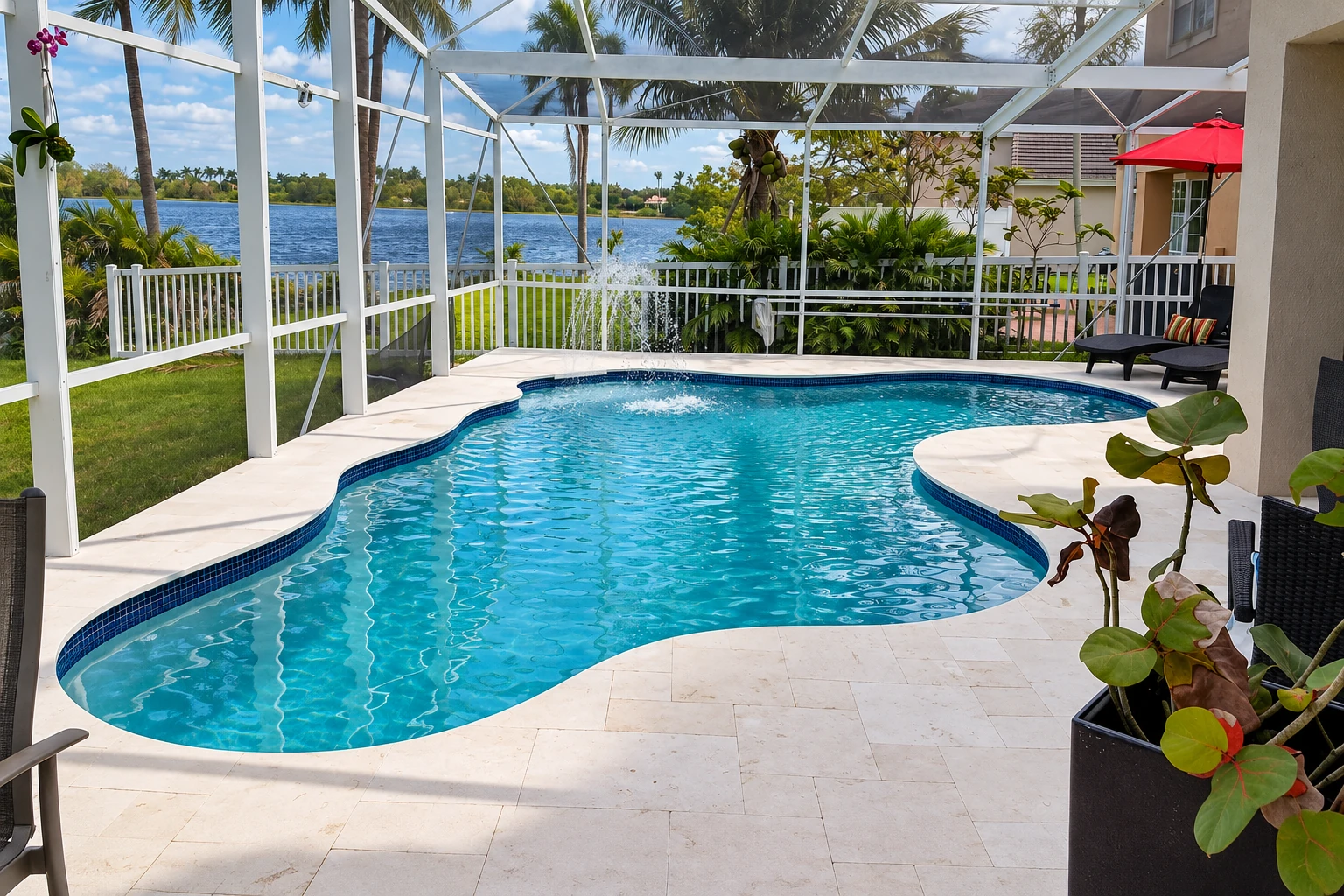
Pool decks take splashing water every day, so we slope them away from the pool and the house and give them a texture that grips under wet feet.
Steps that have cracked, pulled away from the house or gone uneven get rebuilt with even step heights and a solid footing, so every step lands where your foot expects.
A slab foundation for a garage, backyard unit or addition starts with packed ground and the steel and plumbing set in place, and we pour once it passes inspection.
New foundations for homes and additions get dug, formed, reinforced and poured to the approved plans, because the building above depends on that concrete staying put.
Parking areas at rentals and small businesses take cars turning all day, so we pour them thicker and plan where the water goes on a flat lot.
Footings are the concrete under a wall, post or patio cover, and we dig them to firm ground so what sits on them has something solid under it when the soil gets wet.
When a slab or foundation has sunk, we find out why first, usually water or a soft base, then lift it back toward level and fix that cause.
Concrete cutting opens a clean line through an old slab for a new drain, a door or a section that has to come out, so the rest stays intact.
Send the form and we'll reply within one business day, with no obligation to book. I'll come out to your place in Garden Acres, walk the job and ask what the concrete needs to handle. Then I put the scope in writing so you can compare it with other bids.
(209) 707-1014Garden Acres is unincorporated county land, so building permits come from San Joaquin County's Community Development Department, which permits new construction, additions and remodels. When a job needs one, the pour waits on the permit and each inspection, so part of the schedule is the county's. We check with the county on every project, and when a permit is needed we handle the paperwork and set up the inspections.
Before you hire anyone, check two things. A contractor in California needs a license from the state licensing board, and they should have it before they bid your job. Their business license should come from the county if they're located in unincorporated county land, or from their own city if they're based in one, such as Stockton or Manteca.
What moves the price is mostly the part you won't see once it's done: how much old concrete comes out, how deep we dig to reach firm ground and how much base and slope a flat lot needs. Size, thickness and finish add to it. The schedule turns on the permit if there is one, the weather and curing, the wait while new concrete hardens before you use it. I put the scope in writing at the estimate.
I started this business in Manteca in 2021 after years of property upkeep, fixing the same cracked walks and sunken slabs over and over. That's why we figure out why your old concrete failed before we pour anything new. Usually it's the subgrade, the dirt the slab sits on, left soft or raked flat instead of dug out and packed, or water that was never given somewhere to go.
When a budget gets tight, the base is what people want to cut first, because nobody sees it on pour day. I'd cut the finish instead. A plain broom finish, the light texture that keeps a slab from getting slick, on a well-packed base usually holds up better than a stamped slab on loose dirt. We also cut control joints, shallow grooves that give the slab a planned place to crack, before it picks its own.
I come out to look at the job and write the estimate myself, and our crew lead and crew do the forming, pouring and finishing while I check in as it goes. We're fully licensed and insured. Satisfaction guaranteed on every job. Call (209) 707-1014 or send us a request to set up a time.
The ground in this part of San Joaquin County shapes concrete work more than most people expect. Here's what it changes on your job and how we plan around it.
The county sits low and very flat, in the basin the San Joaquin River and its tributaries drain through, so rain doesn't run off a yard on its own. It pools at the lowest spot, and if that's against your slab or foundation, it softens the ground underneath. We check where your water runs before we form anything and build a gentle fall away from the house into every slab.
The county has an exceptionally high water table, the depth where the soil stays soaked, so the dirt under a slab can stay damp longer than you'd guess. Wet, soft ground is what lets concrete sink and crack. That's why we dig out to firm soil and pack a real gravel base rather than raking the existing dirt smooth and pouring on top of it.
Spring is when the county tends to flood, with snowmelt running down from the Sierra Nevada. Ground that's soaked doesn't pack well, so if your yard is still wet we'd rather wait for it to dry than pour on mud. That's one reason a pour date can move, and we'll tell you why when it does instead of pushing ahead.
Summer afternoons in the valley get hot, and concrete poured in midday heat can dry too fast at the surface and turn weak and dusty later. We start pours early in the day and keep the slab damp while it cures, so the top you walk on stays hard. It's a small step on pour day that shows up years later.
The county makes that call job by job, and we check with them on every project. Its list of work that generally needs a permit names roofing, pools and plumbing, not flatwork, the driveways and patios poured flat on the ground, but a patio cover, carport or detached garage does need one. You can also ask the county's building office at (209) 468-2098.
Only the current property owner or a California licensed contractor on file with the county can get a county permit. Either one can authorize someone else in writing, using forms from the county. When your job needs a permit, we handle the paperwork and set up the inspections, so you're not chasing it yourself.
A contractor needs a state license when the project needs a building permit, uses additional workers, or totals $1,000 or more in labor and materials. Contractors are supposed to hold that license before they bid, so ask for the number with the estimate and check it with the state licensing board. We're fully licensed and insured.
Every driveway gets its own price after I walk it, because the biggest costs are often below the surface. Tearing out the old slab, digging to firm ground and building the base and slope all move the price, along with size, thickness, steel and finish. The estimate is free and on site, and the scope comes in writing so you can compare bids.
You'll stay off it while it cures, and you can walk on a new slab well before you can drive on it. The exact wait depends on the mix and the weather, so we give you both dates on pour day. Tear-out, base work and any county inspection come before that, and the estimate covers what your job involves.
Clear the area of furniture, pots and anything you want to keep, and move cars so the truck and crew can reach the work. Show us where sprinkler lines, drip lines and anything else buried run, because we'll be digging down to firm ground. Keep pets and kids inside on pour day.
The county's Department of Public Works keeps the flood maps for properties in mapped flood hazard areas, and its staff will help you with them on request at (209) 468-3089. Anything built in a flood hazard zone has to be designed to county rules, so this matters most before a new foundation or garage slab.
We're open 7 AM to 11 PM, seven days a week, so you can reach us at (209) 707-1014 after work or send a request whenever it suits you.