Prime Manteca ConcretePrime Manteca Concrete

Concrete retaining walls in Manteca CA - keep your yard where it belongs

Soil creeping onto your patio or an old wall starting to lean? We build concrete walls that hold the ground back and let the water out.

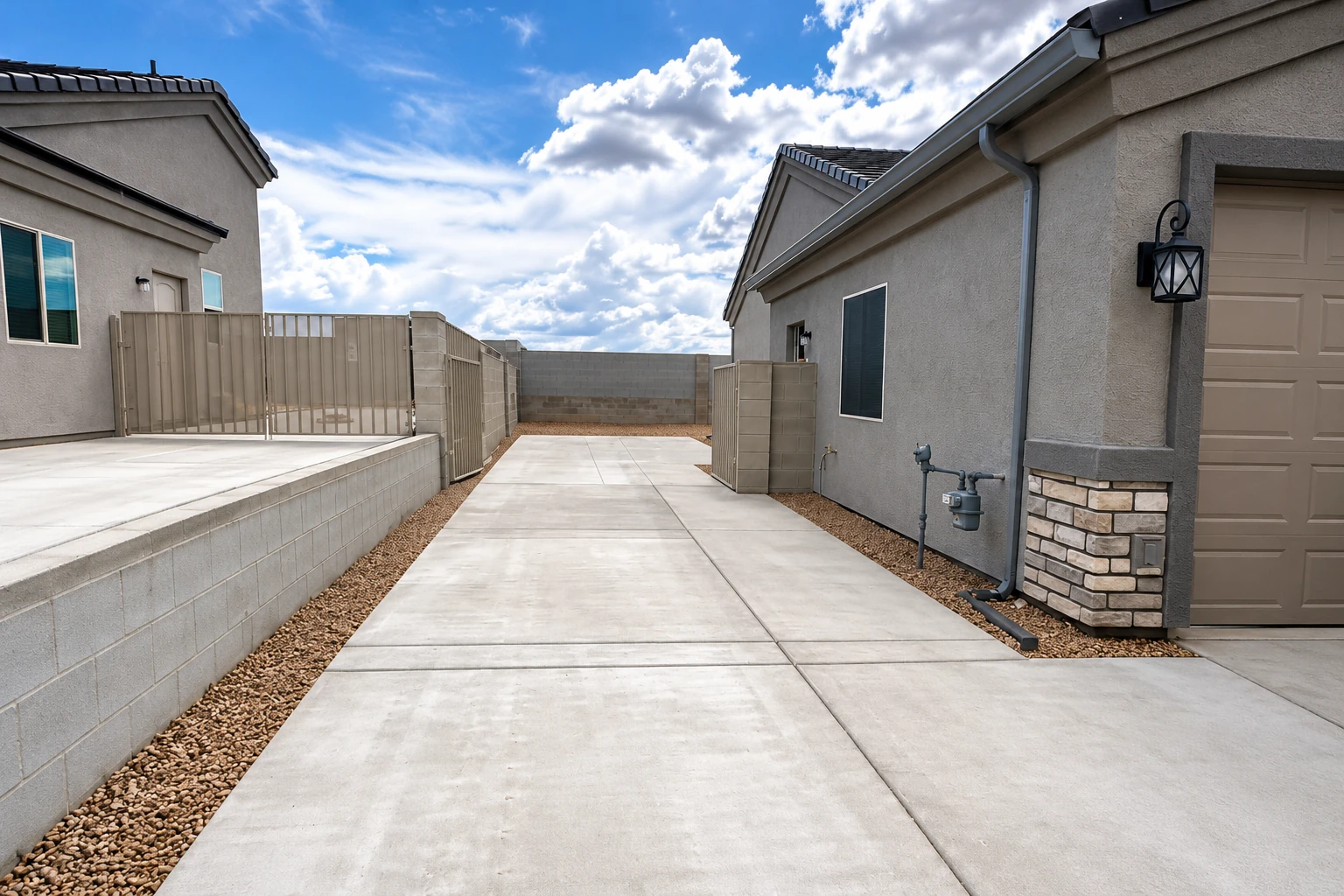
A concrete walkway runs between houses beside a raised block retaining wall and gravel borders.

A concrete retaining wall holds back the soil behind it, plus any weight pressing down on that soil, so a slope or a raised part of your Manteca yard stays put instead of sliding onto your patio, walk or your neighbor's lot.

Which kind of retaining wall does my Manteca yard need?

Most calls start with something you can see. Dirt is spilling over a planter edge, an old wall is leaning or cracked, or water sits at the bottom of a slope after rain. Before I talk about what to build, I want to know why the old one gave out, because whatever pushed it over will push on the new wall too.

The price moves with the wall's height and length, the type of wall, how much digging it takes and how hard the spot is to reach. The schedule turns mostly on what happens before we dig, since a taller wall or one carrying extra weight may need an engineer's design and a city permit first. Your estimate puts the scope in writing so you can compare it with other bids.

What a retaining wall has to handle

A retaining wall looks simple from the front. The hard part is behind it and under it, and these are the things I look at first when I walk a wall job.

Height and extra weight

Height changes the plan more than anything else. One block maker warns that the height people often assume needs no soils engineer is only a rule of thumb that assumes the best case, so if your site has soft ground, a slope above or a driveway near the top, plan on a soils engineer's review.

The ground under the wall

A wall is only as steady as what it sits on. A segmental wall installation guide lists organic soil and soil that swells and shrinks with moisture as unsuitable to build on, so we look at what's under the planned wall line before we settle on a footing, the wide concrete base the wall stands on.

Room to dig behind it

Much of a good wall ends up out of sight. The footing goes below ground and the drain rock and backfill go behind the wall, so we need working room on the high side. A tight side yard or a fence along the top can mean more hand work, and that shows up in both the price and the schedule.

What happens when you call about a retaining wall?

Here's how a wall job goes with us, from your first call to the last load of dirt hauled off. I'm the one you'll meet first, and our crew lead runs the build.

  1. 1

    Call or send a request

    Reach us by phone or the form and tell us about how tall the wall needs to be, counting the footing below ground, and whether it sits on a property line. Those two answers shape everything after.

  2. 2

    I walk the job with you

    I come out myself, ask what the wall needs to hold back and check where the water goes around it. Then I write up the scope and the price so you can line it up against other bids.

  3. 3

    We handle permits, then build

    Once you say yes, we take care of any permit the job needs and set up the inspections. Our crew lead and crew dig and pack the footing, set the steel and the drain, then form and pour.

  4. 4

    Cure, backfill and clean up

    We give the concrete time to cure, the slow hardening it does after the pour, before we backfill behind it with the drain in place. Our crew lead runs the job through cleanup, and I check in as the work goes.

Request an estimate

How we build concrete retaining walls

Water behind a wall is what puts the real load on it, so drainage is the first thing I plan, not something tacked on at the end. We work out where rain and sprinkler water in the soil will go and build the drain rock and pipe in from the start, because a wall that can't let water out ends up holding back the water too.

If the wall is tall, holds back extra weight or sits on a property line, we bring in an engineer and check with the city before we pick a wall type. Then we dig the footing down to firm ground and pack it, set rebar, the steel bars that keep the concrete from pulling apart, and pour in the cooler part of the day so the top doesn't dry out weak.

When a budget gets tight, people look at the face of the wall first. I'd keep the money in the footing and the drain every time, because you can stain or texture a wall later, but you can't fix what's under it or behind it without tearing it out.

A lot of walls come with a bigger project. If you're cutting into a slope to make room for concrete pool decks, or flattening a corner for a shop that needs concrete floor installation, we plan the wall and the slab together so the water off one doesn't end up behind the other.

Segmental block wall

Factory-made concrete blocks stacked dry with no mortar, holding the soil mostly by their own weight. One block maker's guide says laying reinforcing grid into the soil behind them lets the wall go taller, carry more weight or sit on weaker ground.

Poured reinforced wall

A concrete wall tied with steel into a concrete footing, so the reinforcing does the work instead of sheer bulk. It takes up less room on the high side and is often the pick for taller walls or ones on a lot line.

Get a written estimate for your retaining wall

Send the form and we'll get back to you within one business day to set a time. I'll come out, look at the wall site and give you a free written estimate on site. There's no obligation to book.

(209) 707-1014

support@mantecaconcretemasonry.com

Retaining walls, permits and property lines in Manteca

In Manteca, the city's Planning and Building Safety Divisions approve permits for retaining walls more than 4 feet tall counting the footing, or walls that support a surcharge, the city's word for extra load on the soil above. Ask Manteca's Building Safety Division what counts as a surcharge on your lot. For any wall, permit or not is the city's call, so we check with them on every project.

On a property line, the city also decides the material. Where the ground on one side sits 18 inches or more above the other, the wall has to be reinforced concrete or reinforced concrete block, so it's worth knowing where your lot line runs before you fall for a particular look.

Around Manteca we see a lot of grade changes between neighboring lots, raised beds along back fences and yards being leveled for a pool or a patio. We build the same walls in Lathrop and Ripon, and we check with the city there the same way before we start.
Why Manteca homeowners call Prime Manteca Concrete for retaining walls

I spent years doing upkeep for a property management company, fixing the same cracked walks and sunken slabs over and over, and I kept wondering why they failed. So I learned the trade on real jobs and started this business in Manteca in 2021. We're best known for working out why old concrete failed before we pour the new.

I come out to see your wall and write the estimate myself. Our crew lead and crew do the forming, pouring and finishing, and I check in on the work as it goes. We're fully licensed and insured. Satisfaction guaranteed on every job. If a slope is moving or a wall is leaning, call (209) 707-1014 or send us a request.

Concrete floor installation

Leveling a sloped corner for a shed, shop or garage usually means a wall on the high side and a flat, well-drained slab sitting inside it.

Concrete pool decks

Pools on uneven lots often need a wall to hold the grade, and the deck around the water has to drain away from both the pool and the wall.

Cities we cover around Manteca

We're based in Manteca and build retaining walls in the cities around it across San Joaquin and Stanislaus counties. If you don't see your city on our list, give us a call and ask.

Retaining wall questions from Manteca homeowners

Do I need a permit for a short retaining wall in Manteca?

A wall more than 4 feet tall counting the footing, or one carrying a surcharge, needs a city permit, and for a shorter wall the city has the final say, so we ask on each job. A wall that needs a permit also needs structural calculations stamped and signed by a licensed engineer, plus a site plan and drawings, and we handle that paperwork.

How much does a concrete retaining wall cost in Manteca?

Hiring a contractor to build a poured concrete retaining wall usually costs about $30 to $50 per square foot across the US. That's a national figure, not our price. Your cost moves with the wall's size, the design, how hard the site is to reach and how much work it takes, and your estimate spells out the scope.

Why does drainage matter behind a retaining wall?

Water trapped in the soil adds pressure the wall has to hold back. One wall maker's specification says its standard designs leave that water pressure out, so without good drainage the design has to account for the water. Ask any contractor you talk to how water will get out from behind your wall.

Can a handyman build a retaining wall in California?

Only on a small job that needs no permit. California's limit for work without a contractor's license is $1,000, and it applies only when the job needs no permit and the person has no one working for them. Inside Manteca city limits, every contractor and subcontractor also needs a valid City of Manteca Business License.

How long does it take to build a concrete retaining wall?

It turns mostly on whether the wall needs an engineer and a permit, because that design and review happen before we dig. On site, we dig and pack the footing, set the steel and drain, pour and let the concrete cure before backfilling, and your estimate lays out the plan for your wall.

How do I get my yard ready for a retaining wall?

Clear plants, pots and anything you want to keep from the strip along the wall line and a few feet behind it, and show us where sprinkler lines and valves run. If the wall is near a lot line, find your property markers or survey so it goes in the right spot.

Have a wall that's starting to lean?

Call (209) 707-1014 while it's still standing, so I can see what's pushing on it before more soil moves and the fix gets bigger.

(209) 707-1014Request an estimate