
Concrete driveway building
When your driveway has broken up or dropped at the garage, we tear it out, dig to firm ground and pack a new base before the pour.
Prime Manteca Concrete pours driveways, patios, walkways, steps and foundations for homeowners, landlords and small property owners in Stockton, CA. We work out why the old concrete failed before we pour the new.
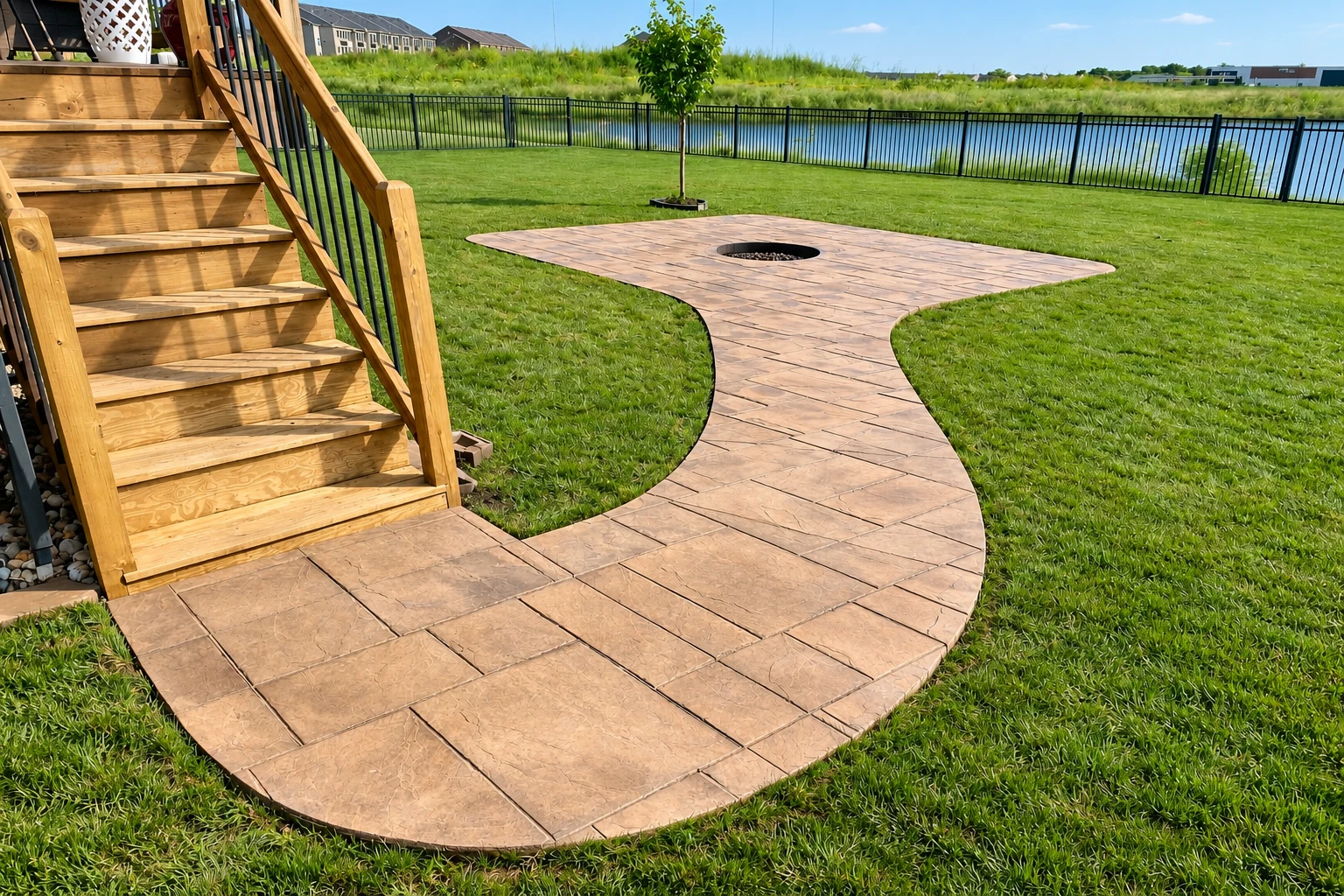
Prime Manteca Concrete builds and replaces driveways, patios, sidewalks, steps, garage floors, retaining walls and foundations in Stockton. Most calls start with something already wrong, like a driveway cracked into pieces, a walk that's sinking or water pooling by the house, and we figure out why it happened before we talk about what to pour.
In the older parts of the city, we break out plenty of driveways and walks that dropped at the garage or the street, and the dirt underneath usually tells the story. It was raked flat and never packed, so the slab sank as the ground settled. Newer lots bring different calls, like a first patio for a backyard that came as bare dirt, or a wider driveway for another car.
Some of our Stockton calls come from landlords and small property owners, where walks and steps take hard daily use and a trip hazard shouldn't wait. We drive up from Manteca for these jobs and do the same work in Lathrop, so the houses and the ground around here are familiar to our crew.
When your driveway has broken up or dropped at the garage, we tear it out, dig to firm ground and pack a new base before the pour.
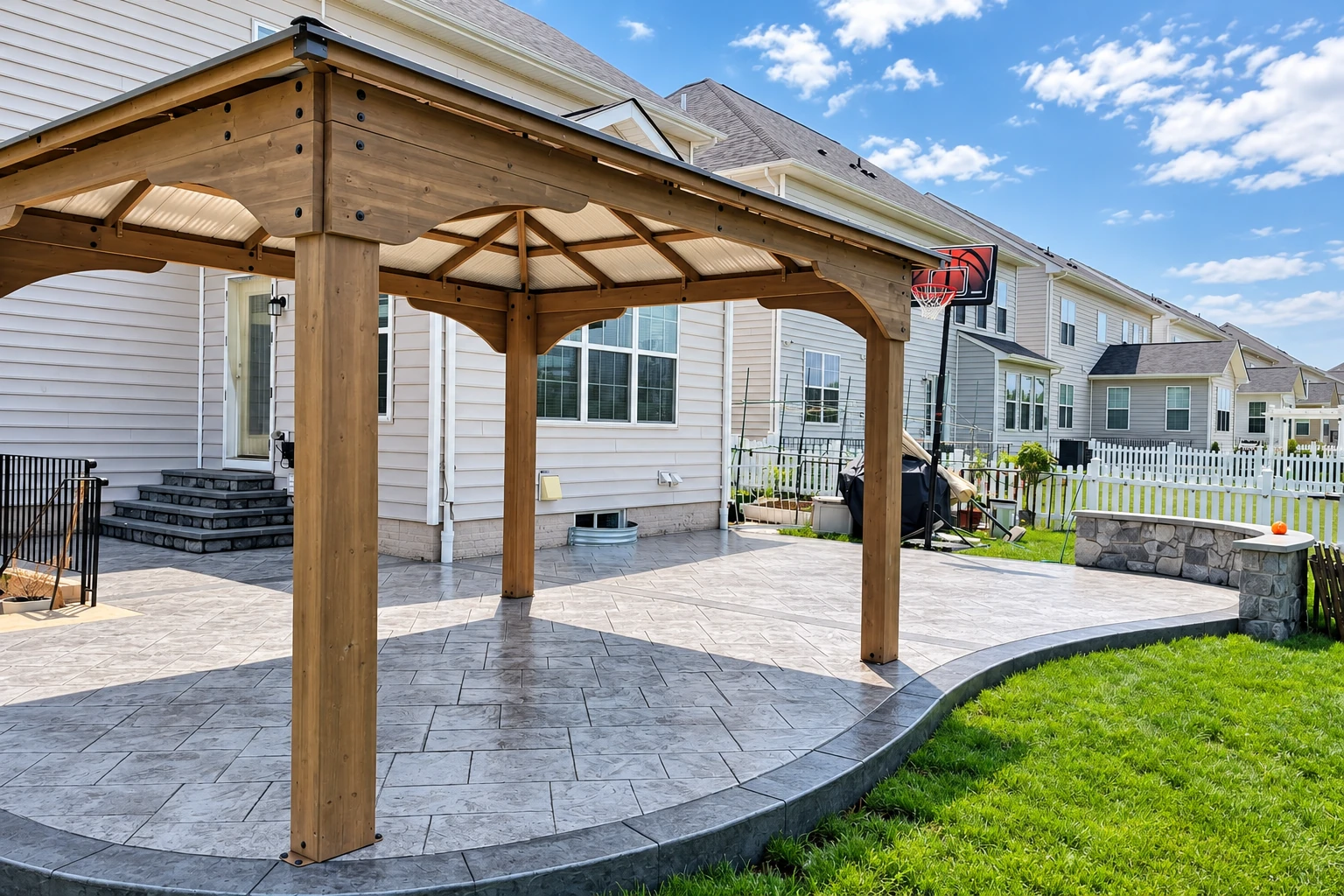
For a backyard patio that stays flat and sheds water, we set the slope before pouring so rain runs to the yard instead of toward your house.
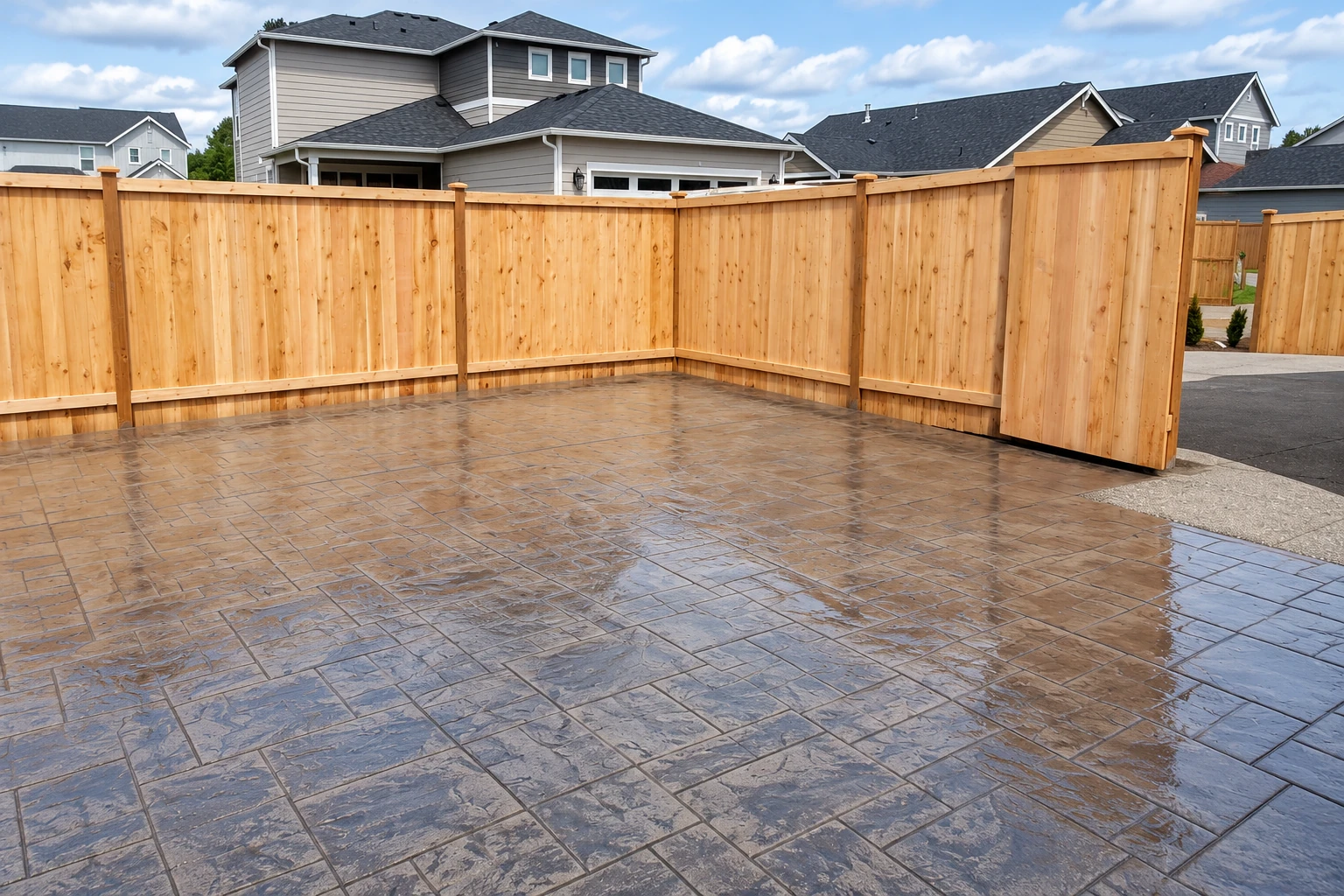
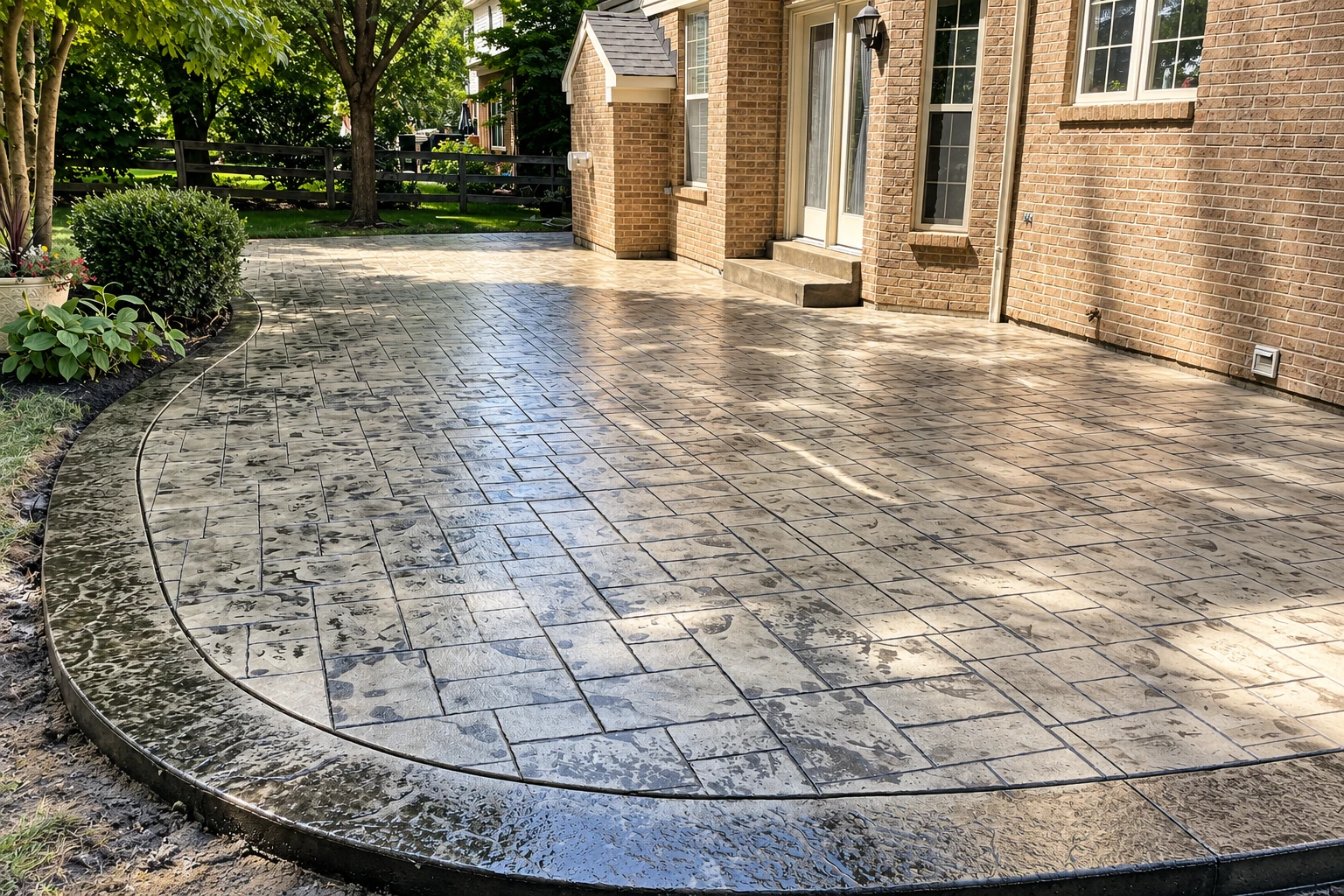
Stamped concrete gives a patio or walk the look of stone or brick in one pour, and we still build the base first so the pattern holds together.
A front walk that's heaved into a trip hazard gets replaced with a level path and control joints, the cut grooves that decide where it cracks.
If your garage floor is cracked, stained or chipping at the surface, we pour a new slab built for the weight of cars and smooth enough to sweep.
Color, borders and textured finishes help new concrete suit an older Stockton house, and we plan the look around how the slab will actually be used.
Where a yard steps down or soil is pushing on a fence, a concrete retaining wall holds the grade, with drainage behind it so water doesn't build up.
We pour interior concrete floors for shops, additions and outbuildings, checking the ground and the moisture underneath before the slab goes in.
A pool deck takes splash water every day, so we give it a slip-resistant finish and a slope that carries water away from the pool and the house.
Crumbling front or back steps get rebuilt with even risers and rebar, the steel bars that hold the concrete together, so they stay solid under daily use.
For an addition, a garage or an outbuilding, we build the slab foundation on dug-out, packed ground, because everything above depends on what's under it.
When a new structure needs a foundation, we lay it out, form it and pour it to the plans, starting with a close look at the soil.
Landlords and small property owners call us for parking areas that hold up to daily traffic, with drainage that keeps puddles from sitting on the slab.
Footings carry the weight of a wall, a deck or a patio cover, so we dig them down to firm ground and what sits on top stays put.
If part of a slab or foundation has sunk, we find out why it dropped before raising it, because lifting it without fixing the cause usually means it sinks again.
We cut openings, remove damaged sections and saw joints into existing slabs, which lets us replace only the bad part when the rest is still sound.
Send the form and we'll get back to you within one business day to set a time to come out to your Stockton property. I'll walk the job myself, ask what the concrete needs to handle and put the scope in writing so you can compare it with other bids. It's free, and there's no pressure to book.
(209) 707-1014Whether your driveway, patio or foundation needs a permit is up to the City of Stockton, or the county if you're outside city limits, so we check with them on each project. When one's needed, we handle the paperwork and set up the inspections. The pour waits until that's done, so it's often what sets your start date.
Before you hire anyone, us included, look the contractor up with the Contractors State License Board and ask which city or county issued their business license. We're fully licensed and insured, and we run Stockton jobs the same way we do in Modesto and the other cities around Manteca in San Joaquin and Stanislaus counties.
Price mostly turns on how big and thick the slab is, how much old concrete and soft dirt has to come out, and whether the water needs a new path away from the house. The finish matters too, since stamped or colored work takes more labor than a broom finish, the light texture that keeps wet concrete from getting slick. Your written estimate spells all of that out for your job.
Before I started this business in Manteca in 2021, I spent years doing upkeep for a property management company, and a lot of it was cracked walks, sunken slabs and water pooling where it shouldn't. The same problems kept coming back, so I learned the trade on real jobs to find out why. That's still where we start on yours.
Usually it's that soft, unpacked dirt I mentioned. The subgrade, the ground the slab sits on, is the part nobody sees on day one and the first thing people cut from a budget. I'd put the money there before a fancier finish, because a stamped pattern on soft ground cracks just like plain concrete. We also cut control joints early, so the slab cracks along them and not somewhere nobody chose.
Our crew lead and crew do the forming, pouring and finishing, and I check in as the work goes, which is how a slab sloping toward the house gets caught before the concrete sets. Satisfaction guaranteed on every job. Call (209) 707-1014 or use our request form to set up a visit.
These are the things that change how we plan a slab in Stockton, from flood maps near the levees to how the concrete gets into a fenced backyard.
The state's Levee Flood Protection Zone maps estimate how far water could spread if a state-federal levee failed at full flow. Land inside a zone can also flood for other reasons, like drainage problems, and land outside one can still face risk. It's worth a look at the map before a large slab or a foundation, and it's one more reason we pay close attention to where water goes on Stockton jobs.
Water pooling against the house usually starts with a slab that falls toward the foundation instead of away from it. Before we set forms, we check where the water comes from, off the roof, the lawn and the neighbor's yard, and where it should go. Then we build the fall so it heads to the yard or the street and keeps running there after the next storm.
Plenty of backyard patios and pool decks sit behind a narrow side yard or a locked gate, so the concrete comes in by wheelbarrow or a pump line instead of straight off the truck. We look at access during the estimate, because it changes the crew size, the equipment and the cost. On the way in, we protect your lawn, your fence and your neighbor's.
We plan pours for the part of the day that gives the crew time to finish the surface before it stiffens. A top that dries out too fast can turn weak and dusty later, chipping under shoes and tires, and sealing it afterward won't fix that. If the timing isn't right for a good finish, we'd rather move the pour than rush it.
Your price is set by the driveway's size, whether the old one has to be broken out and hauled away, and how much base work the ground needs before the pour. A plain broom finish costs less than stamped or colored concrete. The free on-site estimate gives you the full scope in writing so you can price it against other bids.
You can walk on new concrete well before you can drive on it, because the slab keeps gaining strength while it cures, the slow hardening that takes moisture and time. We'll tell you when your slab is ready for foot traffic and when it's ready for cars, so plan on parking in the street for a while.
Move cars, planters and anything stored along the slab, and keep pets inside on pour day. If you know where sprinkler lines, cleanouts or buried cables run, mark them or tell me at the estimate, since we'll be digging there. Clear a path for the truck or pump, and give your neighbors a heads-up.
A contractor needs a California license when the job needs a building permit, uses any workers beyond themselves, or totals $1,000 or more in labor and materials on one or more contracts. The state board doesn't allow a bigger job to be split into smaller ones to get under that line, so be wary of anyone who offers to.
A contractor should hold a business license from the city where their business is located. San Joaquin County says its own license is only for businesses physically located in the unincorporated area, and a business inside an incorporated city should get one from that city. Ask who issued the license and check that it matches where the contractor is based.
For properties inside the City of Stockton, the city's Building Division gives flood zone determinations, according to an undated county flood contacts sheet. It's worth asking before a large slab or a foundation, and if you share what they tell you, we'll plan the grading and drainage with it in mind.
We take calls every day from 7 AM to 11 PM at (209) 707-1014, so you can ring after work, or describe the cracks, sinking or pooling in our request form whenever it suits you.